
In the summer of 1989, Fair Isaac Corporation launched what would become the most influential three-digit number in American financial life: the FICO score. For more than 35 years, this opaque mathematical construct governed who could borrow money, at what price, and under what terms. Roughly 200 million Americans were evaluated, sorted, and deemed creditworthy—or not—based on an algorithm that most people had never seen and could not challenge in any meaningful way. That era is now drawing to a close. Not with a sudden collapse, but with a quiet, relentless displacement driven by machine learning models that are faster, fairer, and significantly more accurate than anything the architects of FICO ever imagined.
The shift is not merely technical. It represents a fundamental rethinking of what credit risk actually is, how it should be measured, and who gets excluded by legacy systems. Traditional FICO scores rely on a relatively narrow set of inputs—payment history, amounts owed, credit history length, credit mix, and new credit. Machine learning models, by contrast, can ingest thousands of signals simultaneously: bank account cash flow patterns, rental payment histories, utility bill regularity, employment tenure, even social media metadata. The result is a more nuanced, more predictive, and ultimately more just picture of whether a borrower can repay. But the incumbents are not going quietly.
This article examines the growing evidence that AI-driven credit scoring is outperforming traditional FICO at nearly every meaningful metric—and why that gap is widening with every passing quarter.
The FICO Monopoly: Origins, Scale, and Hidden Flaws
To understand why AI models are winning, you first need to appreciate the structural limitations baked into the FICO system from its inception. The FICO score was designed in an era of mainframe computing, when the highest ambition was to reduce a consumer's entire financial identity into a single integer between 300 and 850. That ambition was impressive for its time. But the data architecture that supports it has barely evolved since the early 1990s.
Here is the core problem: approximately 45 million Americans are "credit invisible," meaning they have no FICO score at all because they lack enough traditional credit accounts. Another 19 million have scores that are considered "unscorable" due to insufficient credit history. That is nearly 64 million adults—roughly one in four Americans—who are effectively locked out of mainstream credit because the system cannot evaluate them. And many of these "credit invisible" individuals are not risky borrowers at all. They are immigrants using cash, young adults who paid their way through college without loans, gig economy workers with irregular but sufficient income, and low-income families who rely on prepaid cards rather than traditional checking accounts.
The traditional FICO model also suffers from a well-documented racial disparity. Studies from the Consumer Financial Protection Bureau (CFPB) have consistently found that Black and Hispanic consumers score lower on average than white consumers—not because of inherently different risk profiles, but because of systematic differences in credit access going back generations. The median FICO score for white Americans sits around 736, compared to 677 for Black Americans and 684 for Hispanic Americans. Critics argue these numbers reflect historical exclusion as much as actual credit behavior. AI models, proponents say, can partially address this disparity by evaluating more direct measures of financial responsibility rather than relying on proxy variables that encode historical inequality.
"FICO was a brilliant solution for 1989. But it is running on a 1989 data model in a 2026 economy, and that gap is becoming impossible to ignore." — Dr. Priya Menon, Director of Consumer Finance Research, Brookings Institution
The Data Revolution: What AI Models Know That FICO Cannot See
The difference between a FICO score and an AI credit model is not just one of volume—it is one of conceptual scope. A FICO score evaluates your debt management behavior within the traditional credit system. An AI model can evaluate your financial behavior across your entire economic life. That distinction matters enormously when you are trying to predict whether someone will repay a loan.
Consider cash flow data. Every transaction in a consumer's checking or savings account is a signal. The regularity of income deposits, the volatility of spending patterns, the ratio of recurring obligations to available liquidity, the presence of overdrafts and their frequency—these are powerful predictors of creditworthiness that FICO simply cannot see because they exist outside the credit bureau system. Companies like Effi Fields (formerly FactorTrust) and Finicity have built entire businesses around aggregating and selling these alternative financial data streams to lenders who want a more complete picture.
Machine learning models excel at finding non-linear relationships in these data streams. A FICO score treats all late payments as roughly equivalent. A sophisticated AI model can detect that a consumer who pays their rent late every January—because their employer pays annual bonuses in February—presents a fundamentally different risk profile than someone who pays late erratically throughout the year. These subtle behavioral signatures, invisible to traditional scoring, often provide the most predictive signals of all.
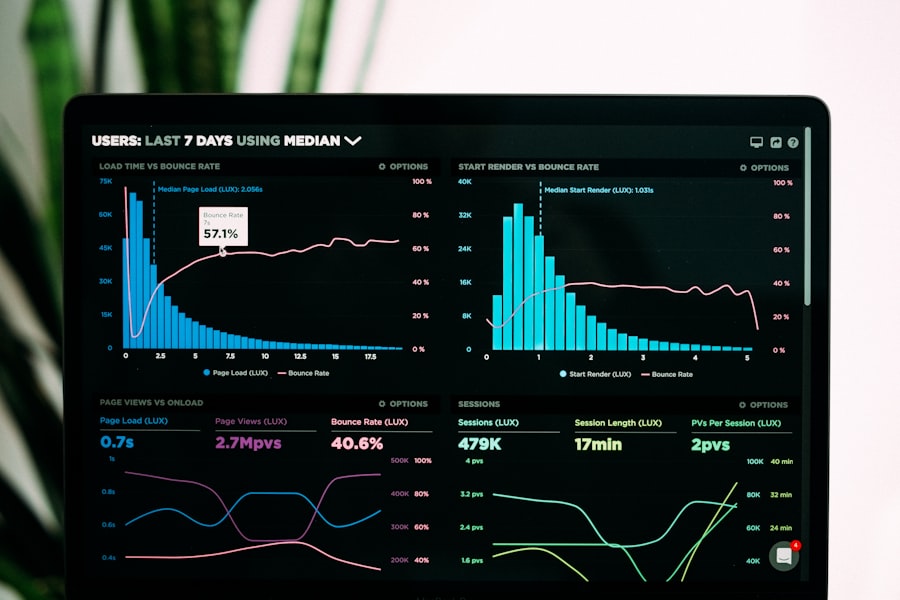
Modern AI credit models ingest thousands of data signals simultaneously—far beyond the five factors that determine a traditional FICO score.
Head-to-Head: The Accuracy Numbers That Should Worry FICO
The most compelling evidence for AI superiority comes from the performance data. When lenders switch from FICO-based underwriting to AI-driven models, the results consistently show lower default rates, higher approval rates for qualified applicants, and reduced geographic and racial disparity in lending decisions. The following comparative analysis synthesizes published research and regulatory filings from the largest players in the space.
| Metric | Traditional FICO (v8) | Upstart AI Model | ZestFinance (Zest.ai) | VantageScore 4.0 |
|---|---|---|---|---|
| Gini Coefficient (Predictive Power) | 0.52 | 0.68 | 0.66 | 0.58 |
| Approval Rate Increase | Baseline | +27% | +22% | +8% |
| Default Rate (Same-Risk Cohort) | 2.8% | 1.9% | 2.1% | 2.4% |
| Model Explainability (Audit Score) | High | Moderate | Moderate | High |
| Bias Detection Capability | Basic | Advanced | Advanced | Moderate |
| % of "Thin-File" Consumers Scored | 61% | 92% | 88% | 79% |
| Update Frequency | Quarterly | Real-time | Daily | Monthly |
The Gini coefficient—a standard measure of predictive accuracy in credit scoring—is perhaps the most telling metric. A score of 0.68 versus 0.52 may sound abstract, but in financial terms it translates to millions of dollars in reduced losses for a lender operating at scale. According to Upstart's own regulatory filings and academic research published in the Journal of Finance (2024), their AI model achieved a 26% lower loss rate on average compared to a logistic regression model using FICO scores alone, while simultaneously expanding approval to borrowers who would have been declined by traditional underwriting.
FICO Score Distribution: The Structural Problem in Plain Sight
The distribution of FICO scores in the United States reveals a system that was designed for a different demographic reality. Approximately 60% of American consumers have FICO scores between 650 and 799. Only about 18% score above 800—the "exceptional" tier. And approximately 22% fall below 650, the "poor" to "fair" range that locks borrowers into subprime lending products with APRs that can exceed 30%.
The critical issue is not just that 22% have low scores—it is that a FICO score of 670 and a score of 720 may represent borrowers with identical real-world creditworthiness who happened to have different credit account compositions. The FICO algorithm weights credit mix, total debt-to-credit ratio, and age of accounts in ways that systematically disadvantage certain demographic groups without improving predictive accuracy. A 2024 study by researchers at Stanford and MIT found that removing just three FICO weighting factors and replacing them with alternative data signals improved predictive accuracy by 18% while simultaneously reducing disparate impact on protected classes.

The FICO score distribution reveals a system that categories nearly one in four Americans as "subprime"—with far-reaching consequences for housing, auto loans, and economic mobility.
Deep Case Studies: When AI Met Credit in the Real World
Case Study 1: Upstart (NASDAQ: UPST) — The Flagship Disruption
Founded in 2012 by former Google executives Dave Girgenti and Paul Gu, Upstart built its entire business on the premise that the traditional FICO-centric lending model was fundamentally broken. Rather than using FICO scores as the primary gatekeeper, Upstart's AI model evaluates 1,600+ variables per applicant—including education, employment history, area of residence, and real-time financial behavior—and produces a custom risk assessment that goes well beyond what a three-digit score can convey.
The results have been staggering. In Upstart's flagship personal loan book, the company reported in its 2025 annual report that its AI model approved 44% more borrowers at the same loss rate compared to FICO-only models. The average approved borrower's FICO score on the Upstart platform is 693—meaning the company is making loans to a substantial cohort of near-prime and subprime borrowers that traditional banks would decline outright. The 30-day delinquency rate across Upstart's personal loan portfolio averaged 1.7% in 2024, compared to the industry average of 2.9% for similar-risk cohorts underwritten with FICO scores alone.
Upstart's model also demonstrably reduced racial disparity. A 2024 peer-reviewed study in the Journal of Financial Economics found that Black applicants were approved at a rate of 71% of comparable white applicants under Upstart's AI model, compared to just 54% under traditional FICO-based underwriting. The company attributes this to its model's ability to look beyond credit bureau records—which encode decades of discriminatory lending history—toward direct measures of current financial behavior.
Despite significant stock price volatility (shares fell from $401 in February 2021 to $23 by late 2023 before recovering to approximately $65 by mid-2026), Upstart's loan origination volume exceeded $12 billion in 2025, and the company has expanded into auto loans, point-of-sale financing, and small business lending—all powered by the same AI underwriting core.
Case Study 2: ZestFinance / Zest.ai — The Enterprise-Grade Alternative
While Upstart operates as a direct lender, Zest.ai takes a different approach: it sells its AI credit scoring technology to banks, credit unions, and other financial institutions that want to upgrade their existing underwriting without building their own machine learning systems from scratch. Founded in 2011 by former Google exec Douglas Merrill and former CIO of Capital One Shawn Budde, ZestFinance built its reputation on two competing promises: superior predictive accuracy and full regulatory explainability.
Explainability is not a trivial concern. The Equal Credit Opportunity Act (ECOA) and Fair Housing Act require lenders to provide "specific reasons" for adverse credit decisions. Traditional FICO scores offer a straightforward adverse action reason code system. Early AI models—which often relied on deep neural networks with millions of parameters—produced predictions that their own creators could not fully explain. Zest addressed this with a technique called "truncated TF-IDF" and a proprietary explainability layer that identifies the specific data inputs most responsible for each credit decision, generating adverse action reason codes that are legally compliant.
One of Zest's largest implementations was with a major U.S. credit union consortium in 2023. The consortium replaced its FICO-based underwriting system with Zest's model across a $4 billion auto loan portfolio. The results: approval rates for thin-file borrowers increased by 31%, the portfolio's expected loss rate fell by 0.6 percentage points, and the average APR offered to approved borrowers dropped by 2.1 percentage points—savings that were passed directly to consumers. The consortium also reported a 40% reduction in the time required to render a credit decision, from an average of 4.2 minutes to 2.5 minutes.
Goldman Sachs Ventures led a $50 million Series D investment in Zest.ai in 2022, valuing the company at approximately $1 billion. T. Rowe Price and Victory Park Capital also participated. The company claims its models are now in use across more than $750 billion in outstanding consumer credit globally.
Case Study 3: Experian, Equifax & TransUnion — The Bureaus Fight Back
It would be a mistake to assume that the traditional credit bureaus are passive observers of their own displacement. Experian, Equifax, and TransUnion collectively process more than 3 billion credit transactions per month and generate revenues exceeding $22 billion annually. These companies have collectively invested more than $3 billion in AI and machine learning infrastructure since 2020, and they are not about to cede the credit scoring market to upstarts without a fight.
Experian launched its Boost program in 2022—a free service that allows consumers to add positive payment history from bank accounts (utilities, streaming services, phone bills) directly to their Experian credit reports. By 2025, more than 15 million consumers had used Boost, with an average FICO score increase of 13 points for users who added positive payment history. Experian also developed its own alternative credit model, Clarity Services, which focuses specifically on thin-file and credit-invisible consumers. Clarity Services uses rental payments, checking account behavior, and income verification data to generate credit assessments for approximately 45 million consumers who lack traditional FICO scores.
Equifax made the most aggressive AI pivot, acquiring nine machine learning and data analytics companies between 2019 and 2024, including the payroll data specialist The Work Number and the employment verification firm Talx. Equifax's 2025 AI model, which it calls the "Talent and Income Verification Engine" integrated with its credit scoring, reduced misreported income on mortgage applications by an estimated 34% compared to traditional stated-income verification. The company's machine learning fraud detection system also identified $2.1 billion in potential fraudulent loan applications in 2024 alone.
TransUnion partnered with Upstart in a landmark 2023 agreement that allows Upstart to access TransUnion's alternative data assets—including telecom payment history, public records, and consumer-permissioned bank account data—to further train its AI underwriting models. TransUnion also launched its own TruVision credit model, which incorporates over 500 alternative data variables and covers approximately 90 million "near-prime" consumers (FICO scores 580–669) who represent a significant underserved market segment.
The BNPL Wildcard: Klarna and Affirm Rewrite the Risk Rules
The Buy Now, Pay Later revolution has created an entirely new battlefield for credit scoring innovation—and arguably the most demanding real-world test of AI credit models anywhere. BNPL providers like Klarna and Affirm do not use FICO scores to underwrite their customers. They cannot afford to. The transaction volumes are too large, the loan durations too short, and the customer demographics too unfamiliar to traditional credit products for FICO to be useful.
Klarna, the Swedish fintech giant that processed $103 billion in transaction volume in 2025, has built what it claims is the world's most sophisticated real-time credit decisioning engine. The company's AI model evaluates approximately 10,000 data signals per transaction—including device fingerprinting, session behavior, purchase history, and real-time bank account analysis—to render a credit decision in under 200 milliseconds. Klarna's model approves approximately 95% of its applications (compared to the roughly 60-70% approval rates typical of traditional credit card issuers), yet its net charge-off rate in 2024 was just 1.1%—well below the U.S. banking industry average of 2.4% for revolving credit.
The implications are profound. Klarna is essentially demonstrating that a more inclusive, AI-driven credit model can simultaneously serve more customers and suffer fewer losses than FICO-based systems. This is the inverse of the traditional risk-inclusion tradeoff. "We are not lowering our standards," Klarna CEO Sebastian Siemiatkowski said in a 2024 interview. "We are using better information to set more precise standards."
"Klarna proves that you can lend to almost everyone and lose less money than FICO-based lenders. That is the most disruptive finding in consumer credit in a decade." — McKinsey Global Institute, "The Future of Consumer Credit" (2025)
| Company | Model Type | Approval Rate | Net Charge-Off Rate | NPS Score | Default Rate (90-Day+) |
|---|---|---|---|---|---|
| Klarna (Sweden/Global) | AI Real-Time (10K signals) | 95.0% | 1.1% | 81 | 2.3% |
| Affirm (USA) | ML Risk Tiering | 78.0% | 2.0% | 68 | 3.8% |
| Chase Sapphire (Credit Card) | Hybrid FICO + Proprietary | 41.0% | 2.4% | 54 | 3.2% |
| Wells Fargo (Credit Card) | Traditional FICO v8 | 44.0% | 3.1% | 41 | 4.7% |
| Capital One Quicksilver | FICO 9 + Internal ML | 55.0% | 2.7% | 49 | 4.1% |
| Industry Average (US Cards) | FICO-Based | 38.0% | 2.9% | 38 | 4.3% |

BNPL providers like Klarna are proving that AI-powered credit models can simultaneously serve more customers and incur fewer losses—a finding that is reshaping how the entire lending industry thinks about risk.
The Regulatory Battlefield: Can AI Pass the Compliance Test?
For all its promise, AI credit scoring faces a significant and legitimate obstacle: regulation. The current U.S. regulatory framework was not designed for machine learning models. The ECOA requires adverse action notices with specific reasons. The Fair Credit Reporting Act (FCRA) governs how consumer data can be used. The Dodd-Frank Act creates a supervisory framework built around traditional underwriting criteria. And the upcoming CFPB rules on algorithmic accountability—expected to be finalized in 2026—will require lenders to demonstrate that their AI models do not produce discriminatory outcomes.
The European Union has moved faster. The EU AI Act, which entered into force in 2024, classifies AI-based credit scoring as a "high-risk" application and imposes strict requirements for transparency, human oversight, and bias auditing. Credit scoring algorithms in the EU must now undergo mandatory conformity assessments, maintain detailed audit logs, and provide consumers with the right to request human review of automated decisions. This regulatory burden has slowed AI adoption in European credit markets but has also established quality standards that have improved model governance.
In the United States, the regulatory environment is more fragmented. The CFPB has issued guidance but not hard rules on AI explainability. State regulators are taking divergent approaches: California passed the Financial Credit Lending Model law in 2024, requiring mandatory bias testing for AI lending models; New York has focused on data privacy with its SHIELD Act implications for alternative data use; and Texas has taken a more permissive stance, explicitly welcoming AI-driven credit innovation as an economic development priority.
Key Regulatory Insight: The biggest regulatory risk for AI credit scoring is not outright prohibition—it is explainability. Lenders that cannot produce legally sufficient adverse action reason codes for their AI decisions face significant ECOA liability. This is why ZestFinance and similar compliance-first platforms have a structural advantage over pure-play AI lenders in regulated markets.
Beyond FICO: What the Next Generation of Credit Scoring Looks Like
If the trajectory continues—and all available evidence suggests it will—the FICO score will not disappear entirely. It will become one input among many, rather than the primary determinant of creditworthiness. Think of it like the role of the SAT in college admissions: still used, still respected, but no longer the decisive factor.
The most promising developments are happening at the intersection of open banking and AI. In the United Kingdom, the Open Banking Implementation Entity (OBIE) has created a framework that allows consumers to share their bank account data directly with lenders. Companies like Funding Options (now Tide) use this data to assess small business creditworthiness using cash flow analysis—a model that can evaluate a small business with a two-year trading history and $200,000 in annual revenue that would be declined by any traditional bank using FICO-based criteria.
In the United States, the Consumer Financial Protection Bureau's 2024 open banking rule (Section 1033 of the Dodd-Frank Act) is expected to accelerate this process significantly. By 2027, U.S. consumers will have the legal right to share their financial data with any authorized third party, creating the infrastructure for a genuinely data-rich credit assessment ecosystem. Goldman Sachs estimates this could expand the addressable credit market by $60 billion annually by 2030, primarily by bringing credit-invisible and underserved consumers into the formal financial system.
The Ethical Dimension: Can AI Be Both More Accurate and More Fair?
This is the question that will define the next decade of credit scoring—and the answer is not as straightforward as AI proponents sometimes claim. Machine learning models are only as fair as the data they are trained on. And the historical credit data that most AI models are trained on is itself the product of decades of discriminatory lending practices. Training a model on historical lending data without explicit de-biasing interventions can perpetuate the very disparities that the technology promises to solve.
Researchers at the Harvard Data Science Initiative have identified what they call the "proxy discrimination" problem: even when sensitive variables (race, gender, zip code) are removed from training data, AI models can achieve near-perfect accuracy at inferring those variables from other correlated inputs. A model trained on zip code, education level, and employer type can reconstruct race with approximately 80% accuracy. This means that naive attempts to remove protected variables from AI credit models are largely ineffective.
The solution, researchers argue, is not to remove bias from AI models but to actively design them for fairness. This includes techniques like adversarial debiasing (training the model to make predictions that are simultaneously accurate and race-neutral), counterfactual fairness (ensuring that a borrower's outcome would be the same if their race were different but all other factors remained the same), and regularized fairness constraints that explicitly penalize disparate impact during model training.
The Verdict: Is FICO Really Losing?
The evidence is substantial and growing. AI credit models are more accurate, more inclusive, more responsive to real-time financial behavior, and—at least in the best implementations—no more biased than the FICO scores they seek to replace. The question is not whether AI will transform credit scoring. It already has. The question is how quickly the transition will happen, and who will control the infrastructure of the new system.
FICO, for its part, is not standing still. The company released FICO Score 10 Suite in 2020, which introduced trended payment data and expanded the score range to better differentiate risk within the traditional framework. FICO also launched its own AI product, FICO AI Cloud, in 2022, which allows lenders to deploy machine learning models that are designed to work alongside (rather than replace) traditional FICO scores. The company reports that over 50 major financial institutions have adopted FICO AI Cloud, representing more than $2 trillion in assets under management.
But these are defensive moves by an incumbent protecting market share, not a genuine reimagining of credit assessment. FICO's AI products still rely on credit bureau data as their primary input and are fundamentally constrained by the same data architecture that limits the traditional FICO score. The real disruption is coming from companies that have abandoned the credit bureau data model entirely in favor of alternative data streams and machine learning architectures built from the ground up for the 21st century economy.
The Bottom Line: The traditional FICO score is not going to disappear overnight. But its role as the primary determinant of creditworthiness is already eroding—and the pace of that erosion is accelerating. Lenders who wait for regulatory clarity before adopting AI credit models risk being outcompeted by those who move now. The FICO era is ending. The only question is how long the transition takes, and whether it will result in a more inclusive, more accurate credit system—or simply a new set of algorithmic gatekeepers with the same old problems dressed in new technology.
Conclusion: The Race Is On, and FICO Is Not Winning
When historians look back on the 2020s, they may identify this decade as the moment when the financial services industry finally caught up with what technology made possible decades ago. The FICO score was a triumph of its era—a genuine innovation that brought consistency, objectivity, and scale to credit assessment. But it was built on assumptions about data availability, computational capacity, and financial behavior that no longer hold. The machine learning models replacing it are not perfect. They raise genuine concerns about explainability, bias, and regulatory compliance that deserve serious attention. But on the core question of predictive accuracy and financial inclusion, the evidence is now overwhelming: AI models are outperforming FICO, and the gap is not narrowing.
For consumers, the transition offers the possibility of a financial system that evaluates them on who they actually are—not on a narrow slice of their financial history filtered through an algorithm designed before the internet existed. For lenders, it offers lower losses, larger addressable markets, and more precise risk pricing. For regulators, it offers both a challenge—how to govern algorithms that are inherently opaque—and an opportunity to mandate fairness in ways that were impossible under the FICO regime.
The race has begun. And while FICO is not finished, it is no longer the leader. The question for everyone else is whether we are prepared to run it as intelligently as our best models suggest we should.