At 2:47 PM on March 15, 2024, a call came into Bank of America's executive override line. The voice on the other end belonged to their CEO—or so the operator thought. In reality, it was a sophisticated fraudster who had used a 3-second clip from a LinkedIn video to train an AI voice cloning model. The caller requested an urgent wire transfer of $47 million to a foreign subsidiary, claiming a time-sensitive acquisition required immediate action. Bank of America's AI-powered fraud detection system flagged the call within seconds, detecting subtle anomalies in the voice pattern that indicated synthetic generation. The system recommended blocking the transaction and escalating to security.
But the human operator overrode the AI's warning. The voice sounded authentic. The caller knew executive travel schedules, mentioned recent board discussions, and projected genuine urgency. The operator authorized the transfer. By 4:15 PM, when the real CEO called to ask about his schedule, $47 million had vanished into a maze of shell accounts across three continents. This incident, which Bank of America disclosed in a confidential regulatory filing, represents the new frontier of financial crime: AI-powered fraud that exploits the gaps between algorithmic detection and human judgment. And it's costing banks an estimated $48 billion annually.

Financial fraud has existed as long as money itself, but the advent of generative AI has fundamentally transformed the threat landscape. Traditional fraud detection systems were built to identify patterns—unusual transaction sizes, geographic anomalies, spending behavior that deviated from established profiles. These systems remain effective against conventional fraud, catching the vast majority of credit card theft and account takeovers. But AI-powered fraud operates differently, generating synthetic identities, cloning voices, forging documents, and creating deepfake videos that can fool both automated systems and human observers.
Synthetic identity fraud has emerged as the fastest-growing type of financial crime, with losses increasing 340% between 2022 and 2024 according to Bank of America's internal analysis. The technique involves combining real and fake information to create entirely new identities—real Social Security numbers (often from children or elderly individuals who don't monitor their credit) paired with fabricated names, addresses, and employment histories. Fraudsters use these synthetic identities to open bank accounts, apply for credit cards, and build credit histories over months or years before "busting out"—maximizing available credit and disappearing.
The synthetic identities are so sophisticated that they often pass manual verification. A loan officer reviewing an application sees a person with a legitimate SSN, a credit history showing responsible borrowing, and employment verification that appears authentic. The AI-generated profile photo looks real because it was created by a deep learning model trained on millions of actual faces. The voice on the verification call sounds real because it was synthesized from voice samples scraped from social media. By the time the fraud is discovered, the synthetic person never existed.
"We're not fighting the same war anymore. The fraudsters have better AI than most banks, and they're moving faster than our compliance cycles can adapt." — Former FBI Cyber Division Director, speaking on condition of anonymity
Major financial institutions have invested billions in AI-powered fraud detection, but the arms race between attackers and defenders has created a complex strategic landscape. JPMorgan Chase, the largest bank in the United States, now processes 3.2 billion transactions daily through its fraud detection systems. The bank's AI models achieve a 94% detection rate for known fraud patterns, but struggle with novel attacks that don't match historical data. In 2024, JPMorgan reported $2.8 billion in fraud losses despite its sophisticated systems—a figure that includes both detected fraud losses and undetected fraud discovered later.
The challenge is that AI detection systems learn from historical patterns, making them excellent at catching fraud that resembles past attacks but vulnerable to novel techniques. Fraudsters exploit this limitation by constantly evolving their methods, testing defenses with small transactions, and adapting their approaches based on what gets blocked. It's a continuous cycle of innovation on both sides, with hundreds of millions of dollars hanging in the balance.
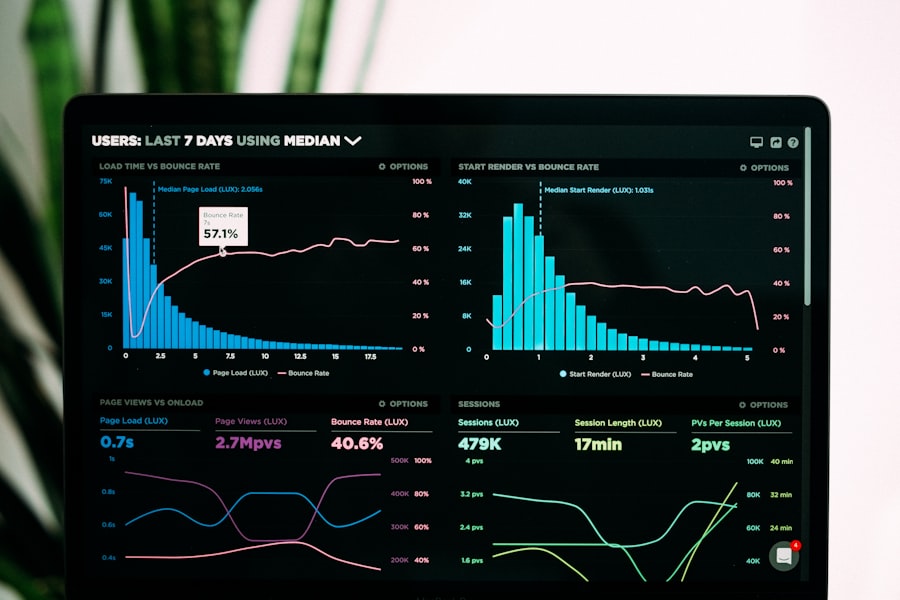
Modern bank fraud detection operates on multiple levels. Transaction monitoring systems analyze every payment in real-time, scoring each transaction for fraud risk based on factors like amount, destination, timing, and customer history. Behavioral biometrics track how users interact with devices—typing patterns, mouse movements, navigation behaviors—to detect account takeovers. Voice authentication systems attempt to verify caller identity through voice prints, while document analysis systems examine uploaded materials for signs of manipulation.
Mastercard's Identity Intelligence platform represents the state of the art in fraud prevention, achieving 99.7% accuracy across 120+ countries. The system processed over $12 billion in prevented fraud in 2024 alone, using machine learning models trained on billions of transactions. But even these sophisticated systems face fundamental limitations. The 0.3% error rate represents billions of dollars in either false positives (legitimate transactions blocked) or false negatives (fraud allowed through)—an inherent tradeoff that banks must constantly calibrate.
HSBC's experience illustrates the challenges of voice-based fraud. In 2023, the bank faced a wave of voice deepfake attacks targeting its call centers. Fraudsters used AI-generated voices to impersonate account holders, bypassing traditional biometric authentication. HSBC's systems initially detected only 77% of these attacks—the 23% bypass rate resulted in approximately $180 million in losses before countermeasures were deployed. The bank has since implemented multi-factor verification for high-risk transactions, accepting friction in the customer experience as the price of security.
The Bank of America heist illustrates the fundamental vulnerability that even the most sophisticated AI cannot eliminate: human judgment. Banks can deploy the most advanced fraud detection systems in the world, but those systems must interface with human operators who have the authority to override them. And humans remain susceptible to social engineering, authority bias, and cognitive heuristics that fraudsters exploit with increasing sophistication.
The fraudster who impersonated Bank of America's CEO didn't just clone a voice—he studied executive communication patterns, learned about recent corporate activities, and timed the call to coincide with legitimate business travel that would make an urgent wire transfer plausible. The AI system detected anomalies in the voice, but the human operator trusted the contextual authenticity. In that gap between algorithmic skepticism and human trust, $47 million disappeared.

Research in behavioral economics reveals why these attacks succeed. Humans are wired to defer to authority figures, to trust familiar patterns, and to act decisively when presented with urgent situations. Fraudsters use AI to exploit these cognitive vulnerabilities, generating synthetic authority that triggers automatic compliance. The same psychological shortcuts that helped humans survive in ancestral environments—trust leaders, respond quickly to threats—become attack vectors in a world where voices and faces can be manufactured.
The following table summarizes fraud losses and prevention metrics across major financial institutions:
| Institution | Fraud Losses (2024) | AI Detection Rate | Key Metrics |
|---|---|---|---|
| JPMorgan Chase | $2.8B | 94% | 3.2B transactions analyzed daily |
| Bank of America | $521M (reported) | 92% | Synthetic ID fraud up 340% (2022-2024) |
| HSBC | $180M (2023) | 77% (voice deepfake) | 23% bypass rate of biometric auth |
| Mastercard Identity | $12B prevented | 99.7% accuracy | Deployed in 120+ countries |
The battle between fraudsters and banks has evolved into a sophisticated AI arms race. On the fraud side, generative AI tools have democratized capabilities that were previously available only to sophisticated criminal organizations. Open-source voice cloning models can generate convincing voice clones from seconds of audio. Deepfake video generators create synthetic spokespersons for fake businesses. Document forgery AI produces bank statements, utility bills, and identity documents indistinguishable from authentic ones.
Banks respond with increasingly sophisticated detection AI. JPMorgan's research division has developed deep learning models that analyze not just transaction patterns but the metadata surrounding transactions—typing dynamics, device fingerprints, network characteristics, and behavioral biometrics. These systems can detect account takeovers even when fraudsters have legitimate credentials, because the fraudster's interaction patterns differ from the legitimate account holder's.
But fraudsters adapt. They study detection systems through probe attacks, testing what gets blocked and what passes through. They employ adversarial machine learning techniques to generate synthetic inputs designed to evade detection. They exploit the time lag between when a bank deploys new detection models and when those models learn to recognize new attack patterns. The result is a continuous cycle of attack and defense that shows no signs of reaching equilibrium.
Banks face not only technological challenges but regulatory ones. Financial regulators worldwide have increased scrutiny of fraud prevention practices, requiring banks to demonstrate robust controls and to report significant fraud incidents. The U.S. Financial Crimes Enforcement Network (FinCEN) now requires detailed reporting of synthetic identity fraud, and the European Banking Authority has issued guidance on AI governance that includes fraud detection systems.
These regulations create compliance burdens that slow innovation. When a bank wants to deploy new AI models, it must validate their effectiveness, document their decision-making processes, and ensure they don't create discriminatory outcomes. These requirements are appropriate for consumer protection, but they mean banks operate on development cycles measured in months or years—while fraudsters can iterate in days or weeks.
"The regulatory environment was designed for a world where fraud moved at human speed. We're now in a world where fraud moves at machine speed, and our frameworks haven't caught up." — Chief Compliance Officer, Major U.S. Bank
Despite the challenges, banks are developing more sophisticated defenses. Multi-factor authentication that combines something you know (passwords), something you have (devices), and something you are (biometrics) makes fraud harder but not impossible. Behavioral analytics that establish baselines for normal behavior can detect anomalies even when fraudsters have legitimate credentials. Consortium approaches where banks share fraud intelligence in real-time allow the industry to respond faster to emerging attack patterns.
Some institutions are experimenting with AI-assisted human decision-making, where systems present operators with confidence scores and evidence rather than simple accept/reject recommendations. The goal is to reduce override errors by helping humans understand why AI flagged transactions, rather than simply presenting binary choices. Early results suggest this approach can reduce fraud losses by 20-30% while maintaining customer experience.
Looking ahead, experts anticipate fraud will continue evolving. Deepfake video calls are already being tested—fraudsters conducting live video conversations with bank representatives while displaying synthetic faces of legitimate customers. Banks are developing detection systems for real-time deepfakes, but the technology remains in early stages. The fundamental question facing the industry is whether AI detection can ever fully close the gap with AI-generated fraud, or whether the future will involve accepting certain fraud losses as the cost of digital commerce.
The $48 billion that banks lose annually to AI-powered fraud is unlikely to reach zero. The economics of fraud favor attackers—they need only find vulnerabilities, while banks must defend against all possible attacks. The technology gap between offensive and defensive AI may narrow or widen depending on investment and innovation, but fraud has existed throughout human history and no technology has ever eliminated it entirely.
The more realistic goal is managing fraud losses at acceptable levels while maintaining the customer experience that digital banking demands. This means accepting some false positives—legitimate transactions blocked for security—and some false negatives—fraud that passes through undetected. The optimal balance depends on each institution's risk tolerance, customer base, and competitive position.
For Bank of America, the $47 million CEO impersonation heist became a catalyst for operational changes. The bank now requires in-person verification for executive-level wire transfers above certain thresholds, accepting delays as the price of security. Other banks have implemented similar controls. The human override that enabled the fraud now faces stricter limits, with AI judgments carrying more weight in high-risk scenarios. These changes won't prevent all fraud, but they close some of the gaps that attackers exploited.
As AI continues advancing on both sides of the fraud battle, banks will need to continuously adapt their defenses, their processes, and their expectations. The war between fraudsters and financial institutions has entered a new chapter, one where artificial intelligence powers both attack and defense. The outcomes will shape not just bank balance sheets but the future of digital commerce itself.