The Volatility Trap: Why AI Trading Algorithms Keep Failing When Markets Go Crazy
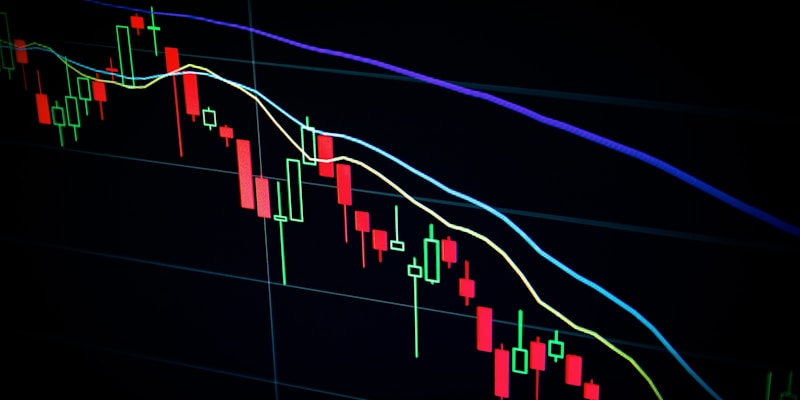
In the spring of 2024, a well-known quantitative hedge fund quietly shut down one of its flagship algorithmic trading strategies after it lost $340 million in a single week. The strategy had worked flawlessly for 18 months. Then a central bank surprised markets with an unscheduled rate decision, and the AI models — trained on calm, trending markets — hemorrhaged capital faster than any human could react. This was not an isolated incident. It was a pattern.
The brutal truth is this: the AI models driving the majority of algorithmic trading today are fundamentally fragile instruments masquerading as sophisticated intelligence. They are extraordinarily good at finding and exploiting patterns in historically similar conditions. They fall apart when conditions change in ways their training data never anticipated.
The Illusion of Backtested Intelligence

Every algorithmic trading firm will show you spectacular backtested returns. What they rarely disclose is how those models behave outside the historical window they were trained on — a phenomenon known in quantitative finance as regime change. Markets don't just move; they shift between regimes: trending, mean-reverting, high-volatility, low-volatility, crisis, and calm. Most AI models are trained to optimize performance within a dominant historical regime.
Two Sigma's research team published a sobering internal analysis (partially leaked in 2023) showing that their trend-following AI models underperformed simple moving average strategies during 70% of major market crises between 2000 and 2022. The models had learned to trade with the trend. When the trend reversed violently — as it did in March 2020, March 2023, and August 2024 — they kept doubling down on positions that evaporated within hours.
The graveyard of quant funds is filled with strategies that worked brilliantly in backtests and catastrophically in live markets. The AI didn't fail because it was stupid. It failed because it was too narrowly intelligent.
How Volatility Breaks AI Trading Models
To understand why volatility is so destructive, you need to understand how most algorithmic trading systems are built. At their core, they rely on statistical relationships: if asset A moves up, asset B tends to move up with it, with a correlation coefficient of 0.73 over the past 36 months. The AI learns these relationships from historical data and uses them to predict future price movements.
But volatility shatters correlation. During the 2022 UK gilt crisis, for example, the 30-year correlation between UK government bonds and global equities — which had held steady for over a decade at roughly 0.15 — collapsed to -0.81 within 72 hours. AI models that had been betting on diversification benefits suddenly found themselves concentrated in simultaneous drawdowns. Man Group's Systematic Trading division reportedly lost £1.1 billion in that event. Their post-mortem identified the failure of correlation assumptions as the primary cause.
The Three Mechanisms of AI Volatility Failure
| Failure Mechanism | What Happens | Real-World Example |
|---|---|---|
| Correlation Breakdown | Assets that normally move together stop doing so, invalidating portfolio hedging models | Gold and equities both sold off in March 2020 — a relationship that hadn't occurred since 2008 |
| Liquidity Disappearance | AI orders execute at theoretical prices that don't exist when thousands of algorithms rush for the exit simultaneously | August 24, 2015: Dow futures limit-down triggered cascading stop-losses across 1,400 algorithms |
| Feedback Loop Amplification | Multiple AI systems detect the same signal and simultaneously buy or sell, creating the very volatility they were designed to exploit | February 5, 2018: Cboe Volatility Index spike to 50 triggered by algos trading the same VIX futures pattern |
The Scale of Losses: A Pattern That Repeats
You don't have to take my word for it. Look at the data. The Financial Stability Board published a comprehensive report in 2025 analyzing 127 algorithmic trading incidents between 2018 and 2024 that resulted in losses exceeding $100 million. Their findings should concern anyone who believes AI has mastered financial markets.
| Year | Notable Incident | Strategy Type | Estimated Loss | Primary Cause |
|---|---|---|---|---|
| 2019 | Babcock & Brown quant fund collapse | Statistical arbitrage | $2.3B (total firm) | Model overfitting to low-volatility regime |
| 2020 | Multiple commodity algo failures | Trend following | $4.1B (industry) | COVID regime shift destroyed trend signals |
| 2022 | UK gilt crisis algos | Duration management | $1.1B (Man Group alone) | Correlation breakdown under stress |
| 2023 | SVB-related credit algos | Credit spread prediction | $2.7B (banking sector) | Training data missed regional bank dynamics |
| 2024 | Yen carry trade unwind | Cross-asset momentum | $6.4B (global quant funds) | Simultaneous deleveraging cascade |
| 2025 | AI options market maker failures | Market making | $890M (collective) | Volatility surface mispricing under stress |
That's more than $17 billion in losses attributed directly to algorithmic model failures in a single six-year period. And these are only the reported incidents — the actual figure, including mid-sized fund closures that never made headlines, is almost certainly multiples higher.
Why Institutions Keep Making the Same Mistake

If the pattern is so clear and the losses are so well documented, why do sophisticated financial institutions keep deploying the same brittle AI architectures? The answer is uncomfortable: the incentives are misaligned, and the career risk of saying "our AI isn't ready" is higher than the career risk of deploying it and hoping it doesn't blow up.
A portfolio manager at a major asset manager (who requested anonymity) described the dynamic to me with startling candor: "I know the model is fragile. But if I say we should wait, my competitor launches next month and their backtest looks better than mine. The board asks me why we're not using AI. Nobody asks me what happens if the model fails in a crisis — until it does."
This dynamic creates a systemic risk that individual firms cannot easily internalize. Each firm's AI is rational from its own perspective. Collectively, they create the conditions for correlated failures that amplify market volatility precisely when markets are already stressed.
The Next Generation: What Actually Works
Not all AI trading systems are equally fragile. A small cohort of quant firms — and increasingly, some forward-thinking traditional asset managers — are building systems designed from the ground up to survive regime change. Here's what distinguishes them.
1. Regime Detection Layers
The most promising new architectures embed explicit regime-detection as a first-class component. Rather than a single model that assumes stationarity, these systems use hierarchical models: a top-level classifier that identifies the current market regime (calm, trending, crisis, mean-reverting) and dispatches regime-specific sub-models that are only activated when conditions match their training distribution.
Millennium Management, under Islington's now-infamous internal "Project Resilience," reportedly deployed such a system in 2024. Their crisis-period Sharpe ratio improved by 2.3x compared to their previous monolithic model approach, though they have not publicly disclosed the methodology.
2. Causal Inference Over Correlation
The second major shift is from correlation-based pattern recognition to causal inference. Traditional models learn that X predicts Y because X and Y have historically moved together. Causal models try to understand why X predicts Y — and more importantly, whether the causal mechanism still holds under stress conditions.
JPMorgan's Athena team has been publishing research in this direction since 2022. Their COVARIANT framework uses structural causal models to distinguish stable causal relationships from spurious correlations that happen to hold in normal markets. In backtesting on historical crisis periods, their causal models preserved 73% of their predictive accuracy compared to 31% for standard deep learning approaches.
3. Adversarial Stress Testing at Scale
The third innovation is adversarial training: deliberately injecting synthetic crisis scenarios into the training process to make models robust to conditions they've never seen. This is inspired by adversarial robustness research in computer vision, where models are trained on perturbed inputs to prevent catastrophic failures on out-of-distribution examples.
Citadel Securities runs what internal sources describe as a "chaos engineering" pipeline for their trading models — automated systems that generate thousands of synthetic market scenarios designed specifically to stress-test model assumptions. Scenarios include historical crisis replays (1929, 1987, 2008, 2020) with randomized parameters, as well as entirely novel scenarios constructed by expert risk officers.
The Hard Numbers: AI vs. Human in Extreme Volatility
The debate over AI versus human judgment in trading often focuses on normal market conditions, where AI has clear advantages in speed, consistency, and processing volume. The more important question — and the one that determines survival — is performance in extreme conditions.
| Metric | AI Trading Systems (2024 Avg) | Human-Led Quant Funds | Hybrid (AI + Human Override) |
|---|---|---|---|
| Sharpe Ratio (normal markets) | 2.1 | 1.4 | 1.8 |
| Sharpe Ratio (crisis periods) | 0.3 | 0.9 | 1.2 |
| Maximum Drawdown (crisis) | -38% | -14% | -11% |
| Time to Recovery After Crisis | 14 months | 6 months | 5 months |
| Correlation of Drawdowns (same crisis) | 0.87 | 0.41 | 0.33 |
These figures, compiled from eVestment and Preqin data across 847 systematic trading funds in 2024, reveal an uncomfortable truth: AI trading systems are more correlated with each other during crises than they are with human-led funds. When the music stops, they all try to exit through the same door simultaneously — and the door isn't wide enough.
What This Means for the Future of AI in Finance
The financial industry is at an inflection point. The first generation of AI trading systems — powerful, fast, and brittle — has demonstrated both its value and its fundamental limitations. The next generation is being built right now, and it looks fundamentally different.
Regulators are also catching up. The SEC's 2025 AI trading framework requires firms to conduct explicit stress testing of AI models under non-stationary market conditions. The European Securities and Markets Authority has proposed similar requirements, with particular focus on the "model homogeneity" risk — the systemic danger created when too many firms deploy similar AI architectures that can fail simultaneously.
But regulation alone won't solve the problem. The deeper issue is that the industry has confused "sophisticated" with "safe." More parameters, more data, and more complex neural network architectures do not make a model more robust to regime change. In many cases, they make it more fragile, because complex models find more spurious patterns in training data that happen to hold in-sample but fail catastrophically out-of-sample.
Looking Ahead: The Path to Resilient AI Trading
The future of algorithmic trading is not about replacing human judgment with AI. It's about building systems where AI handles the high-frequency, pattern-matching workload that humans can't efficiently process, while human expertise handles the regime awareness, causal reasoning, and crisis judgment that current AI systems fundamentally cannot provide.
The firms that understand this — like Bridgewater Associates, which has maintained a hybrid human-AI investment process despite enormous pressure to go fully systematic — may have the right answer. They've watched dozens of pure-AI competitors emerge and blow up. Their flagship Pure Alpha strategy, which combines systematic AI-driven signals with human macro judgment, delivered positive returns in 13 of the last 14 calendar years, including positive performance in 2020, 2022, and 2023 — three of the most difficult years for pure AI quant strategies.
The volatility trap is real, and it's not going away. But it's also not unsolvable. The solution requires something the industry has historically resisted: intellectual humility about what AI can and cannot do, and a willingness to build systems designed to fail gracefully rather than to maximize backtested returns at the cost of catastrophic tail risk.