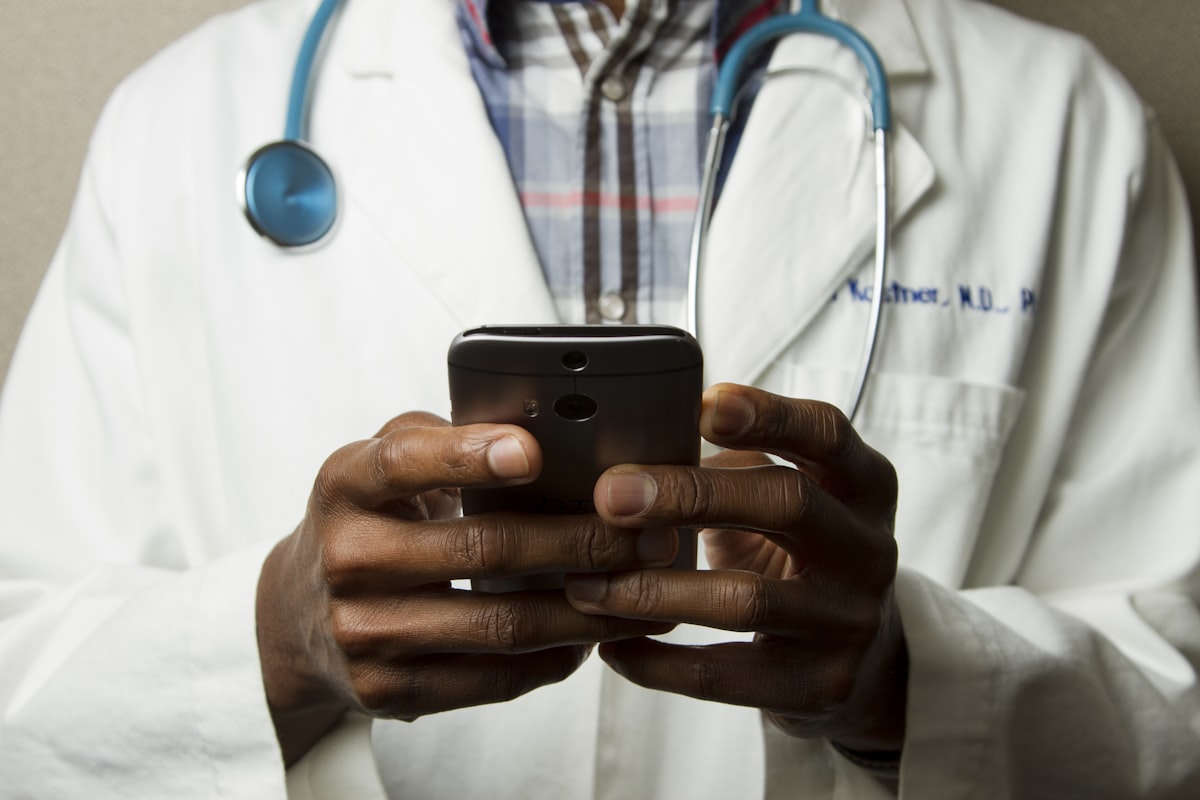
In the emergency department of Massachusetts General Hospital on a winter night, a 58-year-old man presents with chest tightness and shortness of breath. To the triage nurse, he looks uncomfortable but stable. His blood pressure is slightly elevated, his oxygen saturation is 94%, and his ECG shows nonspecific ST-segment changes. The attending physician is three patients deep in a critical care case down the hall. Under the traditional workflow, this patient waits—possibly for 45 minutes, possibly longer, because the ED is at capacity and his presentation does not obviously prioritize him above the others. But the hospital's AI triage system has already scored him as high-risk. A CT scan ordered by protocol reveals an aortic dissection. He is in the OR within 22 minutes. He survives.
This scenario is not hypothetical. It is one of thousands of cases documented in the growing literature on clinical decision support systems—AI tools that are quietly transforming how medicine is practiced, not by replacing doctors, but by ensuring that the right information reaches the right clinician at the right moment. The question is no longer whether AI will enter healthcare. The question is how fast, how deeply, and whether the systems being deployed today are worthy of the trust they are being given.

The Data Problem That Made AI Necessary
Modern medicine generates data at a rate that exceeds any human's ability to process it meaningfully. A single ICU patient might generate 2,000 data points per minute across monitors, ventilators, laboratory systems, and imaging devices. An oncologist reviewing a new cancer case must synthesize the patient's genomic profile, pathology results, imaging studies, medical history, current medications, family history, and the latest evidence from clinical trials—a cognitive load that has simply become unreasonable without assistance.
The consequences of information overload are measurable and sobering. Studies consistently show that physicians follow evidence-based guidelines in only 50–70% of cases. Not because they are negligent, but because the volume and velocity of medical knowledge have exceeded human processing capacity. A 2023 analysis in the Journal of Clinical Oncology found that the average oncologist would need 40 hours per week just to stay current with the published literature in their subspecialty—a physically impossible requirement. AI does not suffer from this limitation. A well-trained model can synthesize thousands of studies, patient records, and clinical guidelines in seconds, and surface the most relevant information for the decision at hand.
This is the fundamental promise of clinical decision support: augment human medical judgment with machine capability, not by replacing the physician's expertise and compassion, but by ensuring they are never operating with incomplete information. The distinction matters enormously to the medical community, where "AI replacing doctors" remains a potent source of resistance and anxiety. The framing that resonates in clinical practice is different: the algorithm never gets tired, never misses a rare drug interaction, and never fails to notice that a patient's sodium level has been drifting downward for six hours while everyone focused on the more dramatic potassium abnormality.
Where Clinical AI Is Actually Working Today
The most mature applications of AI in clinical settings are in medical imaging, and the results have been nothing short of remarkable. Diabetic retinopathy screening is perhaps the most compelling example: a condition where early detection dramatically changes outcomes, where retinal fundus photographs can be reliably interpreted by deep learning models, and where the supply of specialist ophthalmologists is grossly insufficient to meet screening demand. IDx-DR, cleared by the FDA in 2018, became the first autonomous AI diagnostic system authorized for clinical use without physician oversight. In trials, it detected diabetic retinopathy with 87.2% sensitivity and 90.7% specificity—performance comparable to expert human graders.
In radiology, Aidoc has deployed its AI triage system across more than 500 hospitals globally. The system flags critical findings in CT scans—intracranial hemorrhages, pulmonary embolisms, cervical spine fractures—in real time, pushing them to the top of the radiologist's worklist. At NYU Langone Health, deployment of an AI system for detecting lung nodules in chest CT scans increased the detection rate of early-stage lung cancers by 14.3% compared to standard care. More importantly, the AI caught 30% of cancers that had been initially missed by radiologists in routine reads and subsequently identified on follow-up review—a staggering number that represents real lives saved.
The Epic Sepsis Model, deployed in hundreds of US hospitals since 2018, uses electronic health record data to predict sepsis up to 12 hours before clinical deterioration. A 2024 meta-analysis of 17 hospital implementations found that AI-driven sepsis alerts, when properly integrated into clinical workflows, were associated with a 12% reduction in sepsis mortality. However, the same analysis identified a persistent challenge: alert fatigue. In some hospitals, the false positive rate exceeded 70%, leading clinicians to begin ignoring the alerts entirely. The lesson is clear: model performance in isolation is meaningless without careful attention to clinical workflow integration.
The Fragmented Data Problem
Clinical AI faces a challenge that is more fundamental than algorithmic performance: the fragmentation of medical data. The average American patient sees 18 different healthcare providers across their lifetime, and their records exist in at least 15 different electronic health record systems, most of which do not communicate with each other. Epic, Oracle Health (formerly Cerner), Meditech, and dozens of regional systems form a data landscape that looks less like an integrated healthcare system and more like a collection of medieval city-states.
This fragmentation is not merely an inconvenience—it is a direct threat to AI model performance. Machine learning models trained on data from a single health system frequently fail catastrophically when deployed at another institution with different patient populations, different diagnostic coding practices, and different data formats. Google's DeepMind famously demonstrated impressive results with its Streams acute kidney injury detection app at Royal Free London NHS Foundation Trust—only to face intense scrutiny when it emerged that the app was processing patient data under a legal framework that experts said was inadequate. The lesson: technical performance means nothing if the data governance foundations are not solid.

The Dark Table: AI Clinical Applications by Maturity Level
| Application Area | Maturity | Example Systems | Evidence Level | Adoption Rate |
|---|---|---|---|---|
| Diabetic Retinopathy Screening | Clinical Deployment | IDx-DR, EyeArt | FDA-cleared, RCT data | High in developed markets |
| Radiology Triage (CT) | Clinical Deployment | Aidoc, Viz.ai | Multi-center studies | Rapidly growing |
| Sepsis Early Warning | Variable | Epic Sepsis Model | Mixed RCT evidence | Widespread but inconsistent |
| Cancer Pathology | Clinical Deployment | Paige.ai, PathAI | FDA-authorized | Growing |
| Drug Discovery / Design | R&D | AlphaFold, Insilico Medicine | Pre-clinical | Limited |
| Clinical Trial Matching | Pilot | IBM Watson for Oncology | Case studies | Early |
| General Diagnostic Reasoning | Research | Google Med-PaLM | Academic | Experimental |
Google DeepMind's AlphaFold: Reshaping Drug Discovery
The 2022 release of AlphaFold 2 by Google DeepMind marked what many scientists consider the most significant breakthrough in computational biology since the sequencing of the human genome. The system can predict the three-dimensional structure of proteins from their amino acid sequences—an achievement that had consumed decades of scientific effort with limited success—with accuracy comparable to experimental methods like X-ray crystallography and cryo-electron microscopy. The implications for drug discovery are profound.
Understanding protein structure is foundational to rational drug design. Most drugs work by binding to specific proteins and modulating their activity. To design a drug that binds effectively, you need to know the precise shape of the target protein—and this is where AlphaFold proved transformative. Within two years of AlphaFold's release, the system had predicted structures for more than 200 million proteins across all known species—a database that is now freely available to researchers worldwide. This represents a compression of what would have taken experimental scientists approximately 2 billion years of work into a single computational run.
Isomorphic Labs, DeepMind's drug discovery spin-off, announced in 2024 a partnership with Eli Lilly valued at up to $1.7 billion to use AlphaFold-derived insights to design novel small molecule drugs for previously "undruggable" protein targets. The company claims its AI-driven approach reduces the typical drug discovery timeline from 4–5 years to 12–18 months for the initial hit identification phase. While these claims are difficult to verify independently, the investment figures alone signal that the pharmaceutical industry takes the technology seriously.
The Bias Problem: When Training Data Betrays Patients
A 2019 study published in Science revealed that a widely used commercial healthcare AI algorithm systematically underestimated the healthcare needs of Black patients. The algorithm used healthcare costs as a proxy for healthcare needs—reasoning that patients with higher costs must have more complex medical needs. But because Black patients face systemic barriers to accessing care, they historically spent less on healthcare even when their medical needs were equally severe. The algorithm was therefore directing fewer resources to Black patients while technically appearing to follow a neutral, data-driven criterion. The company behind the algorithm ultimately recalibrated its system—but the episode exposed a fundamental vulnerability of AI systems trained on historical healthcare data.
The same dynamics affect dermatology AI, which has demonstrated significantly lower accuracy in diagnosing melanoma in patients with dark skin—precisely because training datasets are overwhelmingly composed of images from patients with light skin. A 2021 study in The Lancet found that several FDA-cleared dermatology AI systems performed up to 15 percentage points worse on skin of color patients. The clinical implications are serious: a diagnostic tool that works well for white patients but poorly for Black patients is not a neutral tool—it is a tool that reproduces and potentially amplifies existing health disparities.
The medical AI community is actively working to address these gaps. The Fitzpatrick skin type classification system, historically used to categorize skin tones in dermatology research, has been widely criticized as inadequate and is being replaced by more nuanced frameworks. Diverse data collection initiatives, including the Skin of Color Society and the NIH All of Us research program, are deliberately expanding the diversity of training datasets. But the structural causes of data bias—institutional racism in healthcare access, underrepresentation of minority patients in clinical trials—will require interventions that go far beyond technical fixes.
Regulatory Pathways: Who Decides If the Algorithm Is Safe?
The FDA's approach to regulating AI-based medical devices has evolved substantially over the past decade. Traditional medical device regulation assumes a static product: a pacemaker either works or it doesn't, and its performance characteristics are known at the time of approval. AI systems, particularly those that continuously learn and adapt, do not fit this model cleanly. An AI that was validated and approved in 2024 may have changed significantly by 2026 if it continued learning on new patient data.
The FDA's 2021 action plan for AI/ML-based Software as a Medical Device (SaMD) introduced the concept of Predetermined Change Control Plans—frameworks that allow manufacturers to specify in advance how their AI system may evolve over time, subject to pre-defined performance boundaries. This is a pragmatic solution to the "moving target" problem, but it requires manufacturers to anticipate future adaptation needs, which is inherently difficult in a rapidly evolving field.
As of 2026, the FDA has authorized more than 900 AI/ML-enabled medical devices, a dramatic increase from fewer than 50 in 2015. The vast majority of these authorizations are for radiology applications, where the regulatory pathway is most established. But the frontier is expanding: the FDA has begun authorizing AI systems for cardiac monitoring, pathology, ophthalmology, and radiation therapy planning. The pace of authorization reflects both the maturity of the underlying technology and the agency's recognition that overly restrictive regulation risks denying patients access to genuinely beneficial tools.
The Human-Machine Interface: Where Medicine Actually Happens
The most sophisticated AI system is worthless if clinicians cannot understand and act on its outputs. This seemingly obvious point has been the downfall of many ambitious clinical AI projects. The Epic Sepsis Model, for example, had a documented false positive rate of 89% in its initial deployment at some hospitals—meaning that for every genuine sepsis case flagged, the system generated eight or nine alerts that turned out to be false alarms. Clinicians, already overwhelmed with alerts from multiple systems, began ignoring the AI alerts entirely.
The solution requires thinking carefully about clinical workflow design, not just algorithmic performance. Companies like Caption Health have approached this challenge by embedding their AI directly into the ultrasound device interface—providing real-time guidance to non-specialist clinicians on how to position the probe and capture diagnostic-quality images. The AI acts as a co-pilot, not an oracle. Its value lies in extending the capability of the operator rather than replacing the need for clinical judgment. This approach has earned broad acceptance in clinical practice in a way that opaque "black box" recommendations have not.
The future of clinical AI is almost certainly not a single omniscient system, but rather a constellation of specialized tools, each focused on a specific clinical task, integrated into existing workflows in ways that feel natural to clinicians rather than burdensome. The goal is not to create an AI that replaces the physician, but to create an environment where every physician has access to the collective intelligence of millions of patient cases, thousands of research studies, and decades of clinical experience—all available at the moment of decision. That world is closer than most people realize, and it is better than the alternative.