For decades, the pharmaceutical industry operated under a brutal arithmetic: it took an average of 10 to 15 years and roughly $2.6 billion to bring a single new drug from laboratory concept to a patient's bedside. Of every 5,000 to 10,000 compounds screened in early discovery, maybe five would reach human trials. Of those five, one might — might — gain regulatory approval. The industry called this attrition rate the "valley of death," and it was the central fact of life for every biotech executive, academic researcher, and venture capitalist in the drug development ecosystem.
That arithmetic is now being rewritten. Not gradually, not incrementally, but with the kind of disruptive force that makes industry veterans reach for their seats belts. Artificial intelligence has entered the drug discovery pipeline at nearly every stage — from initial target identification and molecule design to clinical trial simulation and patient stratification — and the early results suggest a revolution is already underway. Compounds that once required years of painstaking laboratory work can now be designed, synthesized, and tested in months. Molecules that would never have been considered by human chemists are being proposed by generative AI models and validated in wet labs. And the economics of drug development, long considered intractable, are beginning to shift in ways that could make life-saving medications accessible to far more people than ever before.
To understand why AI is so transformative, you first need to understand what drug discovery used to look like — and why it was so prohibitively expensive. The conventional pipeline proceeds through five major stages: target identification, hit discovery, lead optimization, preclinical studies, and clinical trials (Phases I, II, and III). Each stage is a filter, and each filter destroys enormous value. Most compounds fail not because they're dangerous, but because they lack sufficient efficacy, or because they interact badly with other molecules in the body, or simply because they can't be manufactured at scale.
The cost curve is steep and front-loaded. Target identification and validation — figuring out which biological mechanism, if interrupted or enhanced, would treat a disease — can take two to three years. Hit discovery, the process of finding initial compounds that interact with the target, typically consumes another one to two years of high-throughput screening. Lead optimization, where chemists tweak molecular structures to improve potency and reduce toxicity, adds another two to four years. By the time a compound reaches preclinical testing in animals, a company has already invested five to seven years and somewhere between $300 million and $500 million. Then come the clinical trials, which add another six to seven years on average and account for the bulk of the remaining cost.
The result is a system that systematically favors large pharmaceutical companies with deep pockets and diversified portfolios. A startup with a promising idea might run out of money before it ever reaches Phase I. Academic researchers with genuine insights into disease mechanisms often cannot find funding to pursue them past the earliest discovery stages. The entire ecosystem is optimized not for scientific creativity, but for financial survival. AI changes this calculus by compressing timelines at every stage and by allowing much more informed decisions about which compounds are worth pursuing before enormous sums are committed.

The most significant contribution of AI to drug discovery is in the earliest stages — the ones that have historically been the slowest, the most expensive in terms of raw time, and the most dependent on the kind of human intuition that cannot easily be scaled. Modern AI drug discovery platforms use a combination of machine learning, deep learning, and generative models to accomplish tasks that would take human researchers years.
At the target identification stage, AI systems can analyze massive genomic, proteomic, and metabolomic datasets to identify promising therapeutic targets with a speed and comprehensiveness that no team of human researchers could match. AlphaFold, DeepMind's protein structure prediction model, solved one of biology's grandest challenges — predicting the three-dimensional structure of proteins from their amino acid sequences — with an accuracy that in many cases rivals experimental methods like X-ray crystallography and cryo-electron microscopy. The ability to predict protein structures computationally has opened enormous new territory for drug discovery, because understanding a protein's shape is often the first step toward designing a molecule that can bind to it and modulate its activity.
Generative AI models have taken this further. Companies like Insilico Medicine, Exscientia, and Relay Therapeutics use generative adversarial networks, variational autoencoders, and reinforcement learning to design entirely new molecules with specific desired properties — binding affinity, selectivity, solubility, toxicity profiles — from scratch. The AI doesn't just find hits in existing compound libraries; it proposes entirely novel chemical structures that have never been synthesized before. This capability fundamentally changes the nature of drug discovery from a search problem (find an existing molecule that works) to a design problem (create the optimal molecule for the task).
Lead optimization, historically a painstaking process of iterative chemical modification and empirical testing, has also been transformed. AI-powered platforms can predict how changes to a molecule's structure will affect its pharmacokinetic properties — how it is absorbed, distributed, metabolized, and excreted in the body — with sufficient accuracy to guide chemists toward promising candidates much faster than traditional SAR (structure-activity relationship) analysis. This compression of the optimization cycle can shave years off the preclinical timeline.
The theoretical case for AI-driven drug discovery is compelling, but what matters ultimately is what happens in the real world — in clinical trials, under the scrutiny of regulators, and ultimately in patients. Several landmark cases have emerged that demonstrate AI is not just a laboratory curiosity but a genuine clinical and commercial force.
Exscientia, a UK-based AI drug discovery company, made headlines in 2020 when its AI-designed molecule DSP-1181 entered Phase I clinical trials for the treatment of obsessive-compulsive disorder. What was remarkable about DSP-1181 was not just its speed of development — the compound reached Phase I in approximately 12 months, compared to the traditional timeline of four or more years — but the fact that it was designed by an AI system without the kind of extensive human-mediated structure-activity relationship analysis that typically precedes clinical nomination. The compound was designed, optimized, and nominated for development entirely through AI-driven processes. DSP-1181 completed Phase I in 2020, establishing a proof-of-concept for fully AI-designed clinical candidates.
Moderna's experience with its COVID-19 vaccine provides a different but equally instructive example. While Moderna is primarily a biotechnology company built on mRNA technology, the company leveraged AI systems to optimize mRNA sequences, predict secondary structure stability, and design lipid nanoparticle delivery systems. The result was that Moderna went from sequence selection to first clinical batch in just 63 days — a timeframe that would have been unimaginable without AI acceleration. The company's 2021 revenue reached $3.2 billion, demonstrating the enormous commercial value of AI-accelerated development. The speed of Moderna's development, while accelerated by the urgency of the pandemic, showed what is structurally possible when AI is integrated into the development process from the outset.
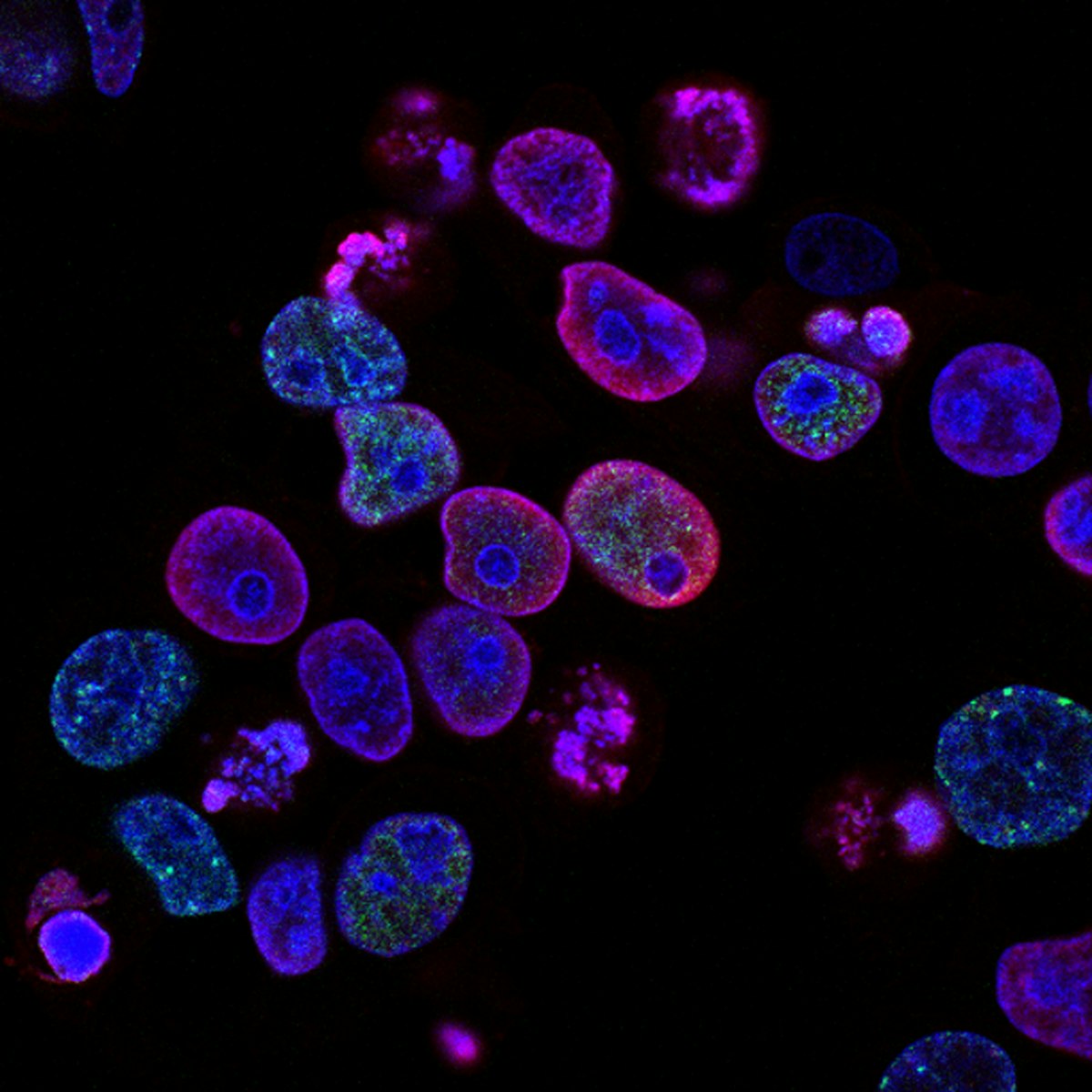
Recursion Pharmaceuticals has taken a different but equally powerful approach. The company has built a library of more than 3 million compounds and uses AI-driven phenotypic screening — observing the effects of compounds on living cells and comparing the resulting biological signatures to disease signatures — to identify promising drug candidates. This approach sidesteps the need to understand a disease's precise molecular mechanism, instead relying on the AI's ability to recognize patterns in cellular morphology and gene expression. By 2024, Recursion had advanced four drug candidates into clinical trials, and the company secured a landmark $700 million partnership with Roche and Genentech to co-develop drugs using Recursion's platform. The Roche partnership represents one of the largest financial commitments to AI-driven drug discovery from a major pharmaceutical company and signals that the industry's most established players are taking the technology seriously.
The economic implications of AI-driven drug discovery extend far beyond individual company success stories. If the cost of bringing a drug to the preclinical stage can be reduced from hundreds of millions of dollars to a few million, the entire risk structure of pharmaceutical R&D changes. Early-stage biotech companies can pursue targets that would have been economically unviable under the traditional model. Academic researchers can validate their discoveries without needing to raise hundreds of millions in venture capital. Drug programs for rare diseases — so-called orphan indications — that were systematically ignored because the patient populations were too small to generate sufficient revenue under the traditional cost structure become commercially viable.
The traditional pharmaceutical R&D model was built for a world where the cost of failure was enormous but spread across large, diversified portfolios managed by companies with billions in revenue. The AI-driven model is far more democratic: it reduces the cost of exploration, which means more ideas can be tested, which means more shots on goal, which means a higher probability of finding genuinely novel therapies. The innovation rate, not just the efficiency of known processes, should increase.
It would be irresponsible to discuss AI drug discovery without addressing the significant challenges and limitations that remain. The most important caveat is that reaching Phase I clinical trials — the first time a drug is tested in humans — is not the same as reaching patients. The failure rate in clinical trials remains high, and no amount of computational optimization can fully predict how a drug will behave in the complex, dynamic environment of the human body. AI can reduce the attrition rate at early stages, but the later stages of development, where drugs are tested for efficacy and safety in larger patient populations, still require traditional clinical trial infrastructure.
There are also concerns about the quality and representativeness of the data that AI systems are trained on. Many AI models are trained on datasets that overrepresent populations of European ancestry, which could lead to drugs that work well for some demographic groups but poorly for others. The interpretability of AI models remains a challenge — understanding why a generative model proposes a particular molecular structure is not always straightforward, and this "black box" quality can complicate regulatory review.
Regulatory agencies are still developing frameworks for evaluating AI-designed drugs. The FDA has signaled openness to AI-assisted development but has not yet established comprehensive guidance on how AI-generated data should be evaluated in regulatory submissions. The European Medicines Agency has similarly been cautious. These regulatory uncertainties could slow the adoption of fully AI-designed drugs in the near term, even as the technology matures.
Despite these challenges, the trajectory is clear. The pharmaceutical industry is in the early stages of a fundamental transition from an empirical, trial-and-error approach to drug development toward a more predictive, computationally grounded approach. AI is the engine of this transition. The companies that master it will define the next generation of medicine. The ones that don't may find themselves left behind in a competitive landscape where speed, cost, and precision are increasingly decisive.
For patients, the promise is profound. Faster drug development means treatments reach the people who need them sooner. Lower development costs mean diseases that affect smaller patient populations become economically viable targets. And AI's ability to identify novel mechanisms of action — targets that human intuition might miss — could lead to breakthroughs in areas like Alzheimer's disease, certain cancers, and antibiotic-resistant infections, where decades of traditional research have yielded disappointingly few effective treatments.
The story of AI in drug discovery is ultimately a story about the relationship between human creativity and computational power. AI does not replace the scientist; it amplifies their reach. It takes the intuitive leaps of experienced researchers and tests them at a scale and speed that was previously impossible. The combination of human insight and machine intelligence is proving more powerful than either alone. And in the high-stakes world of drug development, where a single successful therapy can transform millions of lives, that amplification may prove to be the most important technological development of our era.
| Company / Drug | Achievement | Key Metrics |
|---|---|---|
| Exscientia — DSP-1181 | First AI-designed molecule in Phase I (OCD) | Phase 1 in 12 months (vs traditional 4+ years); completed Phase 1 in 2020 |
| Insilico Medicine — ISM001-055 | First AI-designed drug to enter Phase 1 (IPF) | 18 months from target ID to preclinical candidate; $2.6M cost vs traditional $400M |
| Moderna — mRNA COVID Vaccine | Record-speed vaccine development | 63 days from sequence to clinical trial; $3.2B revenue in 2021; AI-optimized mRNA sequences |
| Recursion Pharmaceuticals | AI phenotypic screening platform | 3M+ compound library; 4 candidates in clinical trials (2024); $700M Roche/Genentech partnership |