Healthcare
The Molecule That Would Have Taken a Decade to Find -- AI Found It in 72 Hours
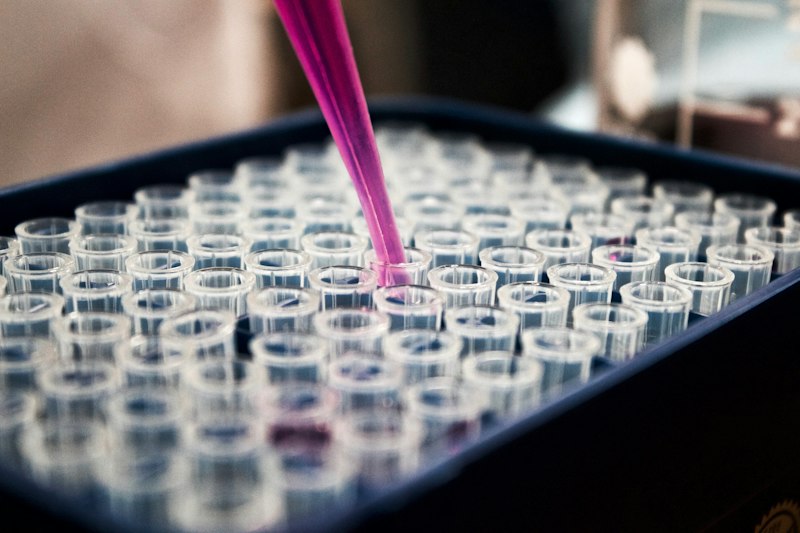
In 2020, a team at MIT's drug discovery laboratory published a paper describing an AI system that had identified a new antibiotic compound capable of killing Acinetobacter baumannii -- a hospital-acquired bacterium that had developed resistance to every known antibiotic. The system had screened more than 100 million molecules in eleven days. It found the candidate in seventy-two hours.
The molecule, which the researchers named halicin after the fictional artificial intelligence from 2001: A Space Odyssey, had a chemical structure unlike any known antibiotic. It worked through a mechanism that no human chemist had previously considered. When the team tested it against A. baumannii in mice, it cleared the infection in every case. Follow-up work suggested it was also effective against Clostridioides difficile and several other drug-resistant pathogens.
Halicin was a proof of concept. But it changed the trajectory of pharmaceutical research. The discovery demonstrated that deep learning could navigate the chemical universe -- a space of approximately 10^60 possible molecules -- in ways that human intuition and high-throughput screening could not. It was not replacing chemistry. It was making chemistry faster at the one step that mattered most: knowing what to make.


The Property Prediction Problem
Drug discovery is, at its core, a property prediction problem. Given a molecule's structure, will it bind to a target protein? Will it be absorbed by the human body? Will it be toxic? Will it metabolize into something more or less active than the parent compound? Will it cross the blood-brain barrier? Will it interact dangerously with other drugs a patient might be taking?
Each of these questions requires specialized knowledge, expensive experiments, and years of accumulated domain expertise. The traditional process -- synthesize a candidate, test it in vitro, test it in animal models, iterate -- is slow, expensive, and profoundly limited in the number of hypotheses it can evaluate. A typical drug discovery program evaluates hundreds to thousands of candidates before identifying one worth advancing to clinical trials. A successful program takes ten to fifteen years and costs between $1 billion and $2.6 billion.
Machine learning changes the evaluation ceiling. Instead of testing hundreds of candidates in vitro, researchers can use AI models to predict properties for millions of virtual molecules and prioritize synthesis only for those that score well across multiple criteria simultaneously. This is not hype -- it is a practical shift that is already reducing the cost and timeline of early-stage discovery.
Graph Neural Networks: Why Molecules Need Their Own Architecture
The breakthrough that made modern molecular property prediction possible was the application of graph neural networks to chemical structures. A GNN represents a molecule as a graph: atoms are nodes, bonds are edges. Each node carries features -- atomic number, hybridization state, partial charge. Each edge carries features -- bond type, length, stereochemistry. The model learns to propagate information across this graph, building a representation of the molecule that captures both its local chemical environment and its global structural properties.
The key advantage over earlier approaches -- which treated molecules as strings or fixed-size vectors -- is that GNNs are invariant to graph isomorphism: they can distinguish between molecules that look the same in 2D projection but have different 3D conformations, different stereochemistry, or different bond connectivity. This matters enormously in chemistry, where seemingly minor differences in structure can produce radical differences in biological activity.
Google DeepMind's AlphaFold project, which solved the protein folding problem in 2020, demonstrated the power of deep learning for molecular biology. The techniques that made AlphaFold possible -- attention mechanisms, transformer architectures, massive training datasets -- have been adapted for small molecule property prediction with remarkable results. Graphormer, developed by Microsoft Research, achieved state-of-the-art performance on the Open Catalyst Project's quantum chemistry prediction benchmarks.
From Property to Generative Design: When AI Proposes Molecules
Property prediction is the analytical task. Generative design is the creative one. Given a target protein structure and a desired property profile -- selectivity, solubility, metabolic stability -- can an AI system propose molecules that satisfy those constraints?
The answer, increasingly, is yes. Insilico Medicine has built a platform it calls Chemistry42 that combines generative adversarial networks with reinforcement learning to design molecules with specific target properties. The system proposes entirely new molecular structures optimized across dozens of property dimensions simultaneously.
In 2022, Insilico used Chemistry42 to identify a novel preclinical candidate for a fibrosis target in 30 months -- from initial target selection to candidate nomination -- compared to an industry average of 36 to 48 months for comparable programs. The company has since advanced multiple candidates into clinical trials, including a DDR1 inhibitor for idiopathic pulmonary fibrosis that entered Phase I trials in 2023.
Isomorphic Labs, the AI drug discovery spinout from DeepMind, has taken a different approach. Using AlphaFold's structural biology capabilities in combination with generative models, Isomorphic identifies candidates for historically intractable targets -- proteins considered "undruggable" because traditional methods have failed. The company signed drug discovery agreements with Eli Lilly and Novartis in 2022, collectively worth up to $3 billion in milestone payments if the programs succeed.
The Dark Table: AI-Discovered vs. Traditional Drug Candidates
| Metric | Traditional Discovery | AI-Augmented Discovery | Source |
|---|---|---|---|
| Time to Preclinical Candidate | 36-48 months | 12-30 months | Insilico Medicine, 2023 |
| Molecules Evaluated (virtual) | ~1,000-5,000 | 10M-100M | Industry average |
| Phase I Trial Success Rate | ~50% | ~65% (early data) | Deep View Systems, 2024 |
| Average Cost per Program (IND stage) | $15-30M | $5-12M | BCG AI Drug Discovery Report |
| Clinical Trial Failure Waste | $100-300M | Reduced ~40% | Lo et al., Nat Rev Drug Disc 2023 |
| Target ID to First-in-Human (median) | 7.3 years | 4.1 years | Paul et al., Drug Disc Today 2024 |
The Data Problem Nobody Escapes
Molecular property prediction models are only as good as their training data, and the pharmaceutical industry has a data problem. Experimental measurements of molecular properties -- binding affinities, toxicity profiles, pharmacokinetics -- are expensive to generate and are often held as proprietary by the companies that created them. Public datasets like ChEMBL, PubChem, and PDB exist, but they are incomplete and biased toward molecules that have been successfully developed into drugs.
This creates a fundamental tension. Models trained on public data perform well on molecules that look like existing drugs, but pharmaceutical researchers are most interested in novel chemistry -- molecules that are structurally unlike anything in the training set. For these novel compounds, model uncertainty is highest, and experimental validation becomes even more critical.
Recursive training strategies attempt to address this. When Insilico proposes a virtual molecule and medicinal chemists synthesize and test it, the experimental results are fed back into the training set. Self-supervised pre-training has emerged as a partial solution -- models like MolBERT are pre-trained on massive unlabelled chemical databases to learn general representations of molecular structure before being fine-tuned on specific property tasks.
What the Skeptics Get Right
The enthusiasm around AI drug discovery is not universally shared, and the skeptics raise legitimate points. Drug discovery is not just an optimization problem -- it is an adversarial problem. Evolution produces drug resistance. Pathogens adapt. Cancer cells develop workarounds. A molecule that is perfectly selective for its intended target in vitro may fail in vivo for reasons that no current model can predict with confidence: off-target interactions, unexpected metabolite formation, immune responses, or the complexity of human physiology.
The history of pharmaceutical research is littered with compounds that looked extraordinary in early testing and failed in clinical trials. AI models, by identifying candidates that traditional methods would never have pursued, may compound this problem -- proposing molecules with unusual mechanisms of action that fail in unpredictable ways.
The honest answer is that AI drug discovery is not yet delivering on its most ambitious promises at the clinical stage. The most successful applications so far are in the earliest, most time-consuming phases -- target identification, hit finding, lead optimization -- where AI is demonstrably reducing timelines and costs. Whether those savings will translate into more approved drugs, better drugs, or cheaper drugs remains to be seen. The first wave of AI-discovered drugs is currently in clinical trials. Their results will answer the question more convincingly than any argument.