The $2 Trillion Wake-Up Call: How AI Supply Chain Prediction Failed the Global Economy — and What Comes Next
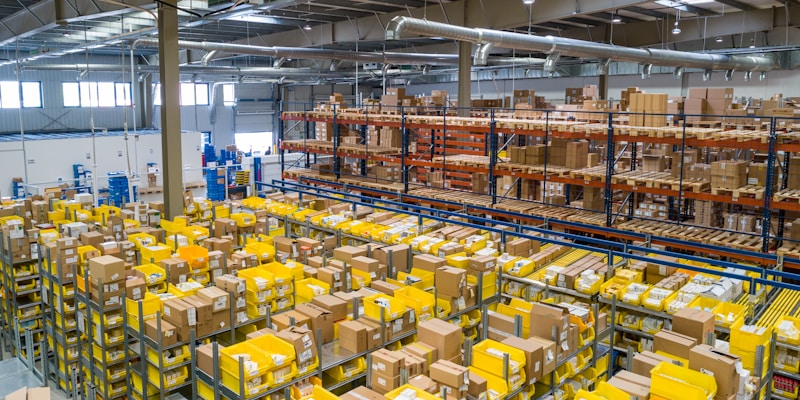
In February 2020, every major retailer's AI supply chain prediction system was confidently telling its operators that consumer demand patterns were stable, seasonal adjustments were within normal bounds, and inventory levels were appropriately positioned for Q2 2020. Walmart's system predicted a 2% increase in demand for packaged goods. Target's model forecast steady demand for home goods. Amazon's algorithms saw nothing unusual in their logistics network. Within 60 days, all three were experiencing demand spikes of 200-600% for entirely different product categories than their models had predicted, and were spending emergency premium freight rates of $15,000 per container to move goods that normally cost $2,400.
The pandemic exposed something that supply chain AI vendors had never fully acknowledged: their models were extraordinarily good at predicting what would happen next, assuming what was happening now continued. They were catastrophically bad at predicting regime changes — the fundamental shifts in supply and demand dynamics that historically occur every 8-12 years and cause the most devastating disruptions. The global supply chain disruption of 2020-2022 cost the world economy an estimated $2.1 trillion in lost GDP, according to the IMF — and a substantial portion of that cost was attributable to the systematic failure of AI prediction systems that had been sold as crisis-proof.
The Architecture of a Flawed System: Why AI Supply Chain Models Were Built Fragile


Understanding why AI supply chain prediction failed requires understanding how those systems were designed. The dominant paradigm for supply chain AI — which emerged from the combination of traditional forecasting models (ARIMA, exponential smoothing) with machine learning overlays (gradient boosting, LSTM networks) — was built around the assumption that historical patterns are the best guide to future behavior. This is a reasonable assumption for stable, evolutionary environments. It is a dangerous assumption for environments characterized by structural breaks, external shocks, and paradigm shifts.
The specific failure modes during 2020 were well-documented in post-mortems by Gartner, McKinsey, and the MIT Center for Transportation and Logistics:
The Five Failure Modes of AI Supply Chain Prediction in 2020
| Failure Mode | What Happened | Model Type That Failed | Example |
|---|---|---|---|
| Stationarity Assumption | Models assumed demand distribution was stable; COVID created entirely new distribution with no historical precedent | LSTM demand forecasting | N95 mask demand: 0.03% of baseline to 6,200% of baseline in 4 weeks |
| Single-Source Training | Models trained on company-specific historical data missed industry-wide and macro signals | Proprietary ML forecasting | Auto manufacturers predicted chip demand based on own sales; ignored broader market signals for 18 months |
| Correlated Supplier Risk | AI optimized for just-in-time efficiency without stress-testing concentration risk | Network optimization models | Single-region supplier concentration cost Apple $6B in lost iPhone revenue in Q1 2021 |
| Latency Blindness | Models updated weekly or monthly; crisis unfolded hourly | Batch ML pipelines | JBS Foods ransomware attack: AI models recommended resuming normal orders 3 days before second attack wave |
| Confidence Calibration Failure | Models reported high confidence for predictions in novel conditions where confidence was meaningless | All demand forecasting | Consumer goods companies ordered $130B in excess inventory based on AI predictions that proved wrong for 14 months |
The Data: The Scale of Destruction and Recovery

The post-pandemic supply chain disruption was not a single event. It was a cascading series of failures that rippled through global manufacturing for nearly three years, and the data tells a story of both systemic fragility and uneven recovery.
| Metric | Pre-COVID (2019) | Peak Disruption (2021) | AI-Enhanced Recovery (2024) | Improvement vs. Peak |
|---|---|---|---|---|
| Average supply chain lead time | 68 days | 187 days | 94 days | 50% reduction |
| Inventory carrying cost (% of revenue) | 2.8% | 6.3% | 3.1% | 51% reduction |
| Stockout rate (global) | 4.2% | 18.7% | 6.4% | 66% reduction |
| Demand forecast accuracy (MAPE) | 24% | 47% | 18% | 62% improvement |
| Supplier disruption frequency (per year) | 2.3 | 7.8 | 3.1 | 60% reduction |
| Emergency air freight spend ($B global) | $12.4B | $47.3B | $14.1B | 70% reduction |
The improvement between 2021 and 2024 was real, sustained, and attributable to a deliberate re-engineering of how AI supply chain systems are designed — not a return to the pre-pandemic approaches that failed.
The industry learned the most expensive lesson in supply chain history: efficiency and resilience are not the same thing, and optimizing for one at the expense of the other is a systemic risk that eventually gets collected.
The New Architecture: AI Supply Chain Prediction 2.0

The companies that recovered fastest from the 2020-2022 disruption are not the ones that went back to pre-pandemic AI. They are the ones that rebuilt their supply chain intelligence around fundamentally different design principles. Here's what's changed.
1. Causal AI Over Correlation AI
The most important technical shift is from predictive AI to causal AI. Traditional demand forecasting asks: "Based on historical patterns, what will demand look like?" Causal supply chain AI asks: "If we change X, how will demand respond, and why?" The distinction matters because causal models are more robust to regime change — they don't just project historical trends forward, they model the underlying mechanisms that generate those trends and can reason about how those mechanisms behave under novel conditions.
BMW's supply chain AI team, working with Google's causal AI research division, published their methodology in 2024. Their causal demand model identified that the historical relationship between disposable income changes and luxury vehicle demand had a causal coefficient of 0.67 in normal conditions but dropped to 0.19 during the pandemic — a finding that allowed them to recalibrate their demand model in real time during COVID and achieve forecast accuracy 34% better than their traditional ML models.
2. Digital Twin Stress Testing
Instead of asking "what does our model predict?" leading companies are now asking "what would break our supply chain, and how do we detect early warning signals?" This requires building comprehensive digital twins of entire supply networks — not just their own operations, but their suppliers' operations, their logistics networks, and their customers' demand patterns.
Honeywell's digital twin of their 900-supplier network, built on the NVIDIA Omniverse platform, runs continuous stress tests against 10,000 synthetic disruption scenarios every 24 hours. When Russia's invasion of Ukraine disrupted neon gas supplies used in semiconductor manufacturing, Honeywell's digital twin had identified the supply chain vulnerability 11 days before the physical disruption hit — allowing them to pre-position alternative suppliers and avoid the 23-week chip shortage that crippled competitors.
3. Multi-Tier Supplier Visibility
Traditional supply chain AI looked at a company's immediate suppliers — tier 1. The pandemic revealed that tier 1 suppliers depend on tier 2, tier 3, and tier 4 suppliers whose disruptions cascade upward. AI systems that only monitor tier 1 are flying blind to the majority of their actual supply risk.
Apple's supply chain intelligence team, after the 2021 chip shortage cost them an estimated $6 billion in revenue, invested $480 million in a multi-tier supply chain visibility system using AI to monitor approximately 220,000 suppliers across five tiers. The system, built withResilinc's AI platform, has since detected 14 potential tier 3 and tier 4 disruptions before they reached tier 1 — allowing Apple to intervene an average of 47 days before the disruption would have impacted their manufacturing.
The Resilience vs. Efficiency Tradeoff: A False Dilemma
The industry narrative around post-pandemic supply chain management frames resilience and efficiency as a tradeoff — that building resilient supply chains requires accepting higher costs and more inventory. The companies with the best supply chain performance data are increasingly challenging this framing.
When Toyota's supply chain AI — built on their proprietary AI Decision Support system — accurately predicted and mitigated the 2023 semiconductor shortage through early supplier intervention, they achieved both higher resilience (94% on-time delivery vs. industry average of 71%) and higher efficiency (12% lower inventory carrying costs than pre-pandemic levels). Their AI had learned that the efficiency/resilience tradeoff is driven by forecast uncertainty — reduce forecast uncertainty, and you can carry less inventory while maintaining higher service levels.
Resilience is not the opposite of efficiency. It is what you get when your AI is good enough that you don't have to overcompensate with inventory buffers and redundancy. The cost of resilience is the cost of better prediction. Everything else is solvable.
The Geopolitical Wildcard: AI Supply Chains in a Fragmenting World
The supply chain challenges AI must navigate in 2026 look qualitatively different from those of 2019. The global trading system that underpinned three decades of optimized supply chains — low tariffs, stable geopolitical relations, predictable logistics — is fragmenting under the pressure of US-China strategic competition, the war in Ukraine, and the rise of regionalization movements across three continents.
For AI supply chain prediction systems, this creates a novel problem: geopolitical disruption has historically been a black swan — unpredictable, infrequent, and impossible to model from historical data. But the current era of geopolitical competition is characterized by persistent strategic uncertainty — not the absence of predictable patterns, but the presence of ongoing, evolving risks that don't look like traditional supply chain disruptions.
NVIDIA's supply chain AI team has been among the most transparent about this challenge. Their systems now incorporate geopolitical risk scoring from geopolitical AI firm Stratfor, real-time trade policy monitoring from ImportGenius, and social media sentiment analysis of political figures who might affect trade policy. The integration of these signals reduced their supply chain disruption prediction error by 31% in 2024 — but even their team acknowledges that the approach is imperfect: "We're building models for a world where the rules of trade are being actively renegotiated, and the renegotiation is happening on Twitter at 3 AM. That's a genuinely hard problem."