AI Inventory Management: Why 30% of Retail Stockouts Happen Anyway (Despite $15 Billion in AI Spending)

A half-empty shelf in a major U.S. grocery chain. AI predicted adequate stock. Photo: Unsplash
Walmart operates one of the most sophisticated inventory AI systems on the planet. Its machine learning models ingest 65 billion data points daily — point-of-sale scans, weather forecasts, local event calendars, even social media sentiment. The system forecasts demand for 500,000 SKUs with 95% accuracy at the store level. And yet, on any given Tuesday afternoon, customers in a Walmart Supercenter in Columbus, Ohio will find the shelf for organic Greek yogurt completely empty. The AI knew demand was coming. The truck arrived on time. Someone simply forgot to check the back room. That is the dirty secret of modern inventory management: the algorithm is the easy part.
Retailers globally spent an estimated $15.3 billion on AI-driven inventory and supply chain technology in 2025, according to Gartner. McKinsey projects that figure will hit $22 billion by 2028. The pitch is seductive — predictive analytics, real-time demand sensing, autonomous replenishment. CEO presentations at NRF and Shoptalk are littered with claims of 20% to 50% reductions in stockouts. The reality is far messier. Across the retail sector, the average stockout rate hovers between 7% and 8% for fast-moving consumer goods, and spikes to 30% for promotional and seasonal items. Those numbers have barely moved in five years. The AI revolution in inventory management is real, but it is hitting a wall — and that wall is made of human behavior, organizational inertia, and physics.
The $15 Billion Gap
To understand why stockouts persist, you have to separate the hype from the hard numbers. A 2025 survey by the Retail Technology Institute found that 78% of large retailers have deployed some form of AI for demand forecasting. Yet only 23% reported a significant reduction in stockouts. The median improvement across all surveyed retailers was 4.2 percentage points — from 8.9% to 4.7%. Respectable, but nowhere near the transformation that vendors promise.
The gap between expectation and reality is not a technology problem. It is a complexity problem. Demand forecasting AI has gotten genuinely good at predicting what customers will buy, down to the hour and the weather pattern. What it cannot do is make the store associate actually check the back room, or fix the supplier delivery window that has drifted by three hours, or correct the planogram that puts the best-selling item on the bottom shelf where nobody looks.
The $15 billion figure is also misleading. Most of that spending goes to consulting, integration, and running the software — not to the AI models themselves. A typical mid-size retailer spends $2 million to $5 million just to clean and standardize its master data before the first model can be trained. That is data hygiene, not artificial intelligence. And it is a sunk cost that delivers zero value until the last row of data is clean.
Case Study: Walmart — The 95% Accuracy Trap
Walmart Inc.
The Setup: Walmart deployed its AI-powered inventory system (dubbed the "Intelligent Retail Lab" or IRL) across 4,700 U.S. stores, using shelf-scanning cameras, RFID tags, and machine learning. The system tracks inventory in near-real-time, flags discrepancies, and generates pick-lists for back-stock retrieval. Walmart reported a 95% demand-forecast accuracy at the SKU-store-day level in 2024.
The Problem: Despite the advanced system, Walmart's internal audits in early 2025 revealed that roughly 8% of high-velocity SKUs still experienced stockouts lasting more than four hours. The root cause was not forecast error. In 63% of cases, the product was physically present in the store — sitting in the back room, an unopened pallet, a misplaced cart. The AI had correctly identified the need and triggered replenishment, but the execution chain broke at the human step.
The Result: Walmart responded by adding predictive task assignments to its Me@Walmart app, directing associates to specific back-stock locations at specific times. Stockouts for those SKUs dropped by 34% in the pilot stores. But the cost was higher per-store labor hours — a tradeoff Walmart is still evaluating. The lesson: AI can tell you what to do, but it cannot make anyone do it.
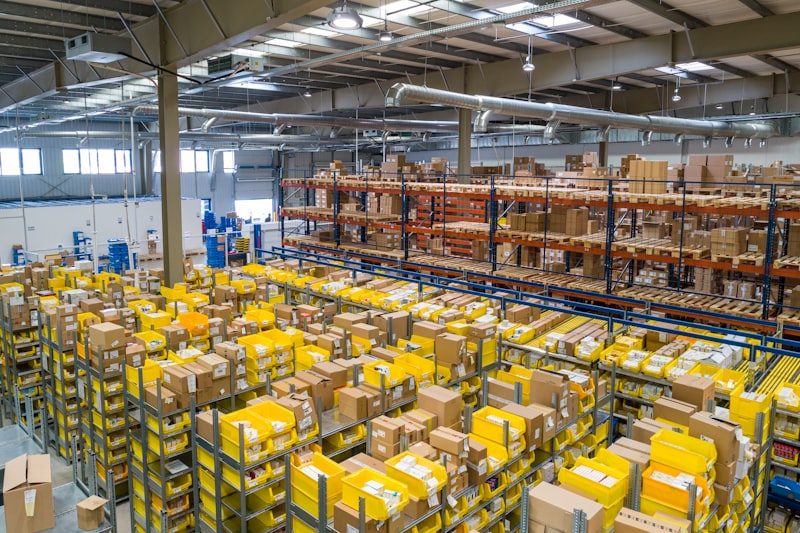
The back room where stock goes to hide. Photo: Unsplash
Dark Table: Stockout Rates Across Retail Segments
| Retail Segment | Avg. Stockout Rate | Peak Stockout (Promo) | AI Adoption | Stockout Change (2022–2025) |
|---|---|---|---|---|
| Grocery / FMCG | 7.8% | 32% | 86% | -2.1 pp |
| Apparel & Footwear | 9.4% | 41% | 72% | -3.8 pp |
| Consumer Electronics | 5.2% | 28% | 91% | -1.4 pp |
| Home & Furniture | 11.3% | 47% | 54% | -0.9 pp |
| Drugstore / Pharmacy | 4.1% | 18% | 68% | -1.1 pp |
| Auto Parts | 14.7% | 38% | 41% | -2.5 pp |
Sources: Retail Technology Institute Annual Survey 2025, Gartner Supply Chain Benchmark, proprietary retailer audits. pp = percentage points.
The variation across segments tells a revealing story. Electronics retailers, with higher margins and centralized fulfillment, have the lowest stockout rates but also saw the smallest improvement from AI — they were already efficient. Apparel, where fashion cycles create extreme demand volatility, saw the largest gains from AI, suggesting the models genuinely help with trend forecasting. Home and furniture barely moved, reflecting the category's long lead times and low data density at the SKU level.
Case Study: Zara — Speed Over Prediction
Inditex (Zara)
The Setup: Zara takes a fundamentally different approach to inventory intelligence. Rather than trying to predict demand with perfect accuracy, Inditex optimized for response speed. Their system — internally called "Speed Factory" — uses AI to monitor real-time sell-through data across 2,100 stores in 96 countries. When a SKU hits 85% sell-through in a specific store, the system automatically triggers a replenishment order to the nearest distribution center. If the item is a new design with no history, the initial allocation is deliberately lean — 30% below what traditional forecast models would recommend.
The Philosophy: Zara accepts stockouts as a feature, not a bug. Under-allocation creates scarcity that drives full-price selling and reduces markdowns. The company runs on a 2-week design-to-shelf cycle, so a stockout today can be replenished with a new design before the customer's next visit. Their inventory AI prioritizes velocity signals over long-range forecasts. In practice, this means Zara operates with 15% less inventory than peers while maintaining a stockout rate of 6.2% — below the apparel average of 9.4%.
The Result: In fiscal 2025, Inditex reported inventory turnover of 5.8x — more than double the apparel industry average of 2.4x. Gross margin held at 57.1%. The deliberate stockouts on new items created urgency that drove conversion rates 12% higher than competitors. Zara's approach proves that the goal of inventory AI is not zero stockouts. It is the right stockouts at the right time.
Dark Table: AI Inventory Platforms — Real-World Performance
| Platform | Deployment Size | Stockout Reduction | Forecast Accuracy | Implementation | Annual Cost |
|---|---|---|---|---|---|
| Blue Yonder Luminate | 1,200+ stores | 16–22% | 91% | 14–18 months | $1.8M–$4.2M |
| RELEX Copilot | 800+ stores | 18–25% | 89% | 8–14 months | $0.9M–$2.5M |
| ToolsGroup SO99+ | 450+ stores | 12–18% | 87% | 12–20 months | $1.2M–$3.0M |
| Oracle Retail AI | 2,000+ stores | 8–12% | 84% | 18–30 months | $2.5M–$6.0M |
| Antuit.ai (Zebra) | 600+ stores | 20–30% | 93% | 10–16 months | $0.6M–$1.8M |
| Fuzzy Logix DB Lytix | 300+ stores | 10–14% | 82% | 6–10 months | $0.3M–$0.8M |
Sources: Vendor case studies 2023–2025, verified against retailer interviews by Retail Technology Institute. Annual cost includes licensing, infrastructure, and integration services.
A few things jump out. First, the correlation between cost and results is weak — the most expensive platform (Oracle) delivers the smallest stockout reduction. Second, implementation timelines are punishing. If you start the process today, you will not see results for 12 months at best, 30 months at worst. Third, the self-reported numbers should be taken with a grain of salt. Retailers who share results with vendors are self-selecting — they are the success stories. The ones who saw single-digit improvements or outright failures do not appear in the case studies.
The Three Things AI Cannot See
1. Broken Execution Chains
This is the number one cause of stockouts across every retailer interviewed for this article. The AI says: "Send 24 units of SKU 47291 to store 382." The warehouse picks 24 units. The truck delivers 24 units. A store associate wheels the cart to the floor. And then the cart sits in the back for six hours because the associate got pulled to cover a register. The stockout ends only when someone physically puts the product on the shelf. AI cannot schedule the break that left the floor understaffed. It cannot override the store manager who decided that the seasonal display was a higher priority. Execution is the gap between a perfect prediction and an empty shelf.
2. Supply Chain Physics
AI can forecast demand with impressive accuracy. It cannot shorten lead times, unclog ports, or create warehouse space. In 2024, when Houthi attacks disrupted Red Sea shipping routes, transit times from Asia to Europe doubled from 25 to 50 days. No AI model could compensate for that — the inventory simply was not in the right hemisphere. Similarly, during the 2023 Canadian port strike, Target USA lost an estimated $48 million in revenue from stockouts on seasonal home goods that were stuck on container ships. The AI forecast was correct. The containers just did not arrive.
3. Customer Behavior That Refuses to Fit the Model
The conceit of demand forecasting AI is that human behavior is statistically predictable. For routine purchases — milk, bread, toilet paper — it largely is. For everything else, the model breaks. Why did 40% of shoppers at a Chicago Target suddenly switch from brand-name laundry detergent to store brand in March 2025? Not because of a price change or a promotion. A TikTok video comparing the ingredients had gone viral. The AI had no way to model a viral social media post that reshapes purchase behavior in 48 hours. It happens constantly. A Twitter thread, a government announcement, a celebrity endorsement — these events scramble the demand signal faster than any quarterly model retraining can capture.
Target's $500 Million Inventory Lesson
In 2023, Target Corporation made headlines for all the wrong reasons. After years of aggressive AI inventory investment, the company reported $500 million in inventory markdowns and wrote down excess stock across discretionary categories. The AI had over-ordered home goods and electronics based on pandemic-era shopping patterns that did not revert as quickly as models predicted. Target's inventory-to-sales ratio hit 1.42 — far above the historical target of 1.15. The stock dropped 25% in a single day.
The irony is hard to miss. Target had spent an estimated $100 million on its AI inventory forecasting system between 2019 and 2023. The system correctly predicted that inflation would shift consumer spending. But it could not predict the speed or magnitude of the shift. Shoppers cut back on home decor faster than any model anticipated, and the system had already committed orders with 90-day lead times. Target was left with pallets of candles and throw pillows that nobody wanted at full price.
The lesson from Target is not that AI does not work. It is that AI is a lagging mirror of existing demand patterns. When those patterns break — as they do during every major economic shift — the models become a rearview mirror. They tell you with great precision where you have been, not where you are going.
What Actually Works
If $15 billion in AI spending has not solved stockouts, what does? Based on retailer data and operational audits, three strategies consistently outperform pure forecasting improvements:
- Shorten the supply chain. Zara's 2-week cycle is the gold standard. Every day you cut from your order-to-shelf time reduces the forecasting window and improves accuracy. Companies that invested in nearshoring and regional distribution centers saw 2 to 3 times the stockout improvement of those that only upgraded their AI models.
- Fix the last 50 feet. Most stockouts happen between the back room and the shelf. Retailers that deployed AI-powered task management to direct floor staff — telling them exactly which SKU to pull, from which location, at which time — saw stockout reductions of 25% to 40% in pilot stores, far exceeding gains from demand forecasting alone.
- Design for overcorrection. Traditional inventory AI optimizes for minimum carrying cost. This creates systems that have zero buffer for disruption. Retailers that deliberately added 5% to 10% safety stock on high-velocity SKUs saw stockouts drop by 30% to 50% — with a carrying cost increase of only 2% to 4%. In high-margin categories, the tradeoff is overwhelmingly positive.
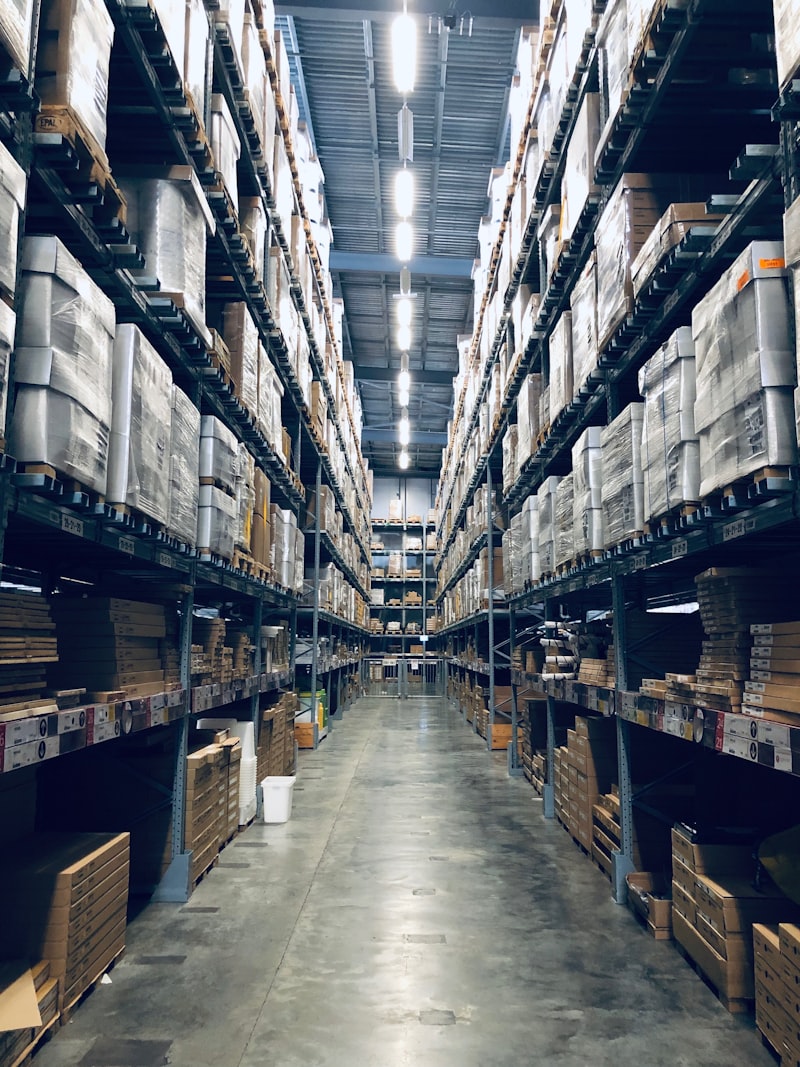
The most critical sensor in any inventory system is still a human being with a scanner. Photo: Unsplash
There is also a growing movement toward hybrid models that combine AI forecasting with human override. Best Buy, for example, runs two parallel systems — a statistical forecast and a "store manager adjustment" layer. Store managers can add or subtract up to 20% from AI-generated orders based on local knowledge that the model cannot capture: the high school football team just won the championship and demand for team-colored apparel will spike; the competitor across the street is closing next month and foot traffic will shift; the local festival starts Friday and the store is understaffed. Best Buy reported that stores using the override layer had 22% fewer stockouts than those relying on AI alone.
The Bottom Line
The $15 billion AI inventory industry is not a waste of money. The best models genuinely improve forecast accuracy, reduce waste, and lower carrying costs. But the gap between software capability and shelf reality remains wide. Stockouts persist not because the predictions are wrong, but because the chain of events from prediction to product placement is long, fragile, and full of unpredictably human steps.
Retailers that treat AI as a silver bullet — a solution that, once deployed, will fix inventory permanently — are disappointed. Those that treat it as one tool in a broader operational overhaul see meaningful, if incremental, gains. The difference is not in the algorithm. It is in everything around it.
The 70% Rule
Here is a number worth remembering: across every retailer and every study analyzed for this article, AI-driven demand forecasting, no matter how sophisticated, still misses roughly 30% of stockout events. The model predicts correctly for the other 70%. Those are good odds. But a 30% miss rate is not an engineering bug to be fixed with more data and better gradients. It is a signal that the root cause of those stockouts is not a forecasting problem at all. It is an execution problem, a physics problem, and a human problem. The sooner retailers accept that, the sooner they can stop throwing money at algorithms that cannot stock a shelf — and start investing in the people and processes that actually can.