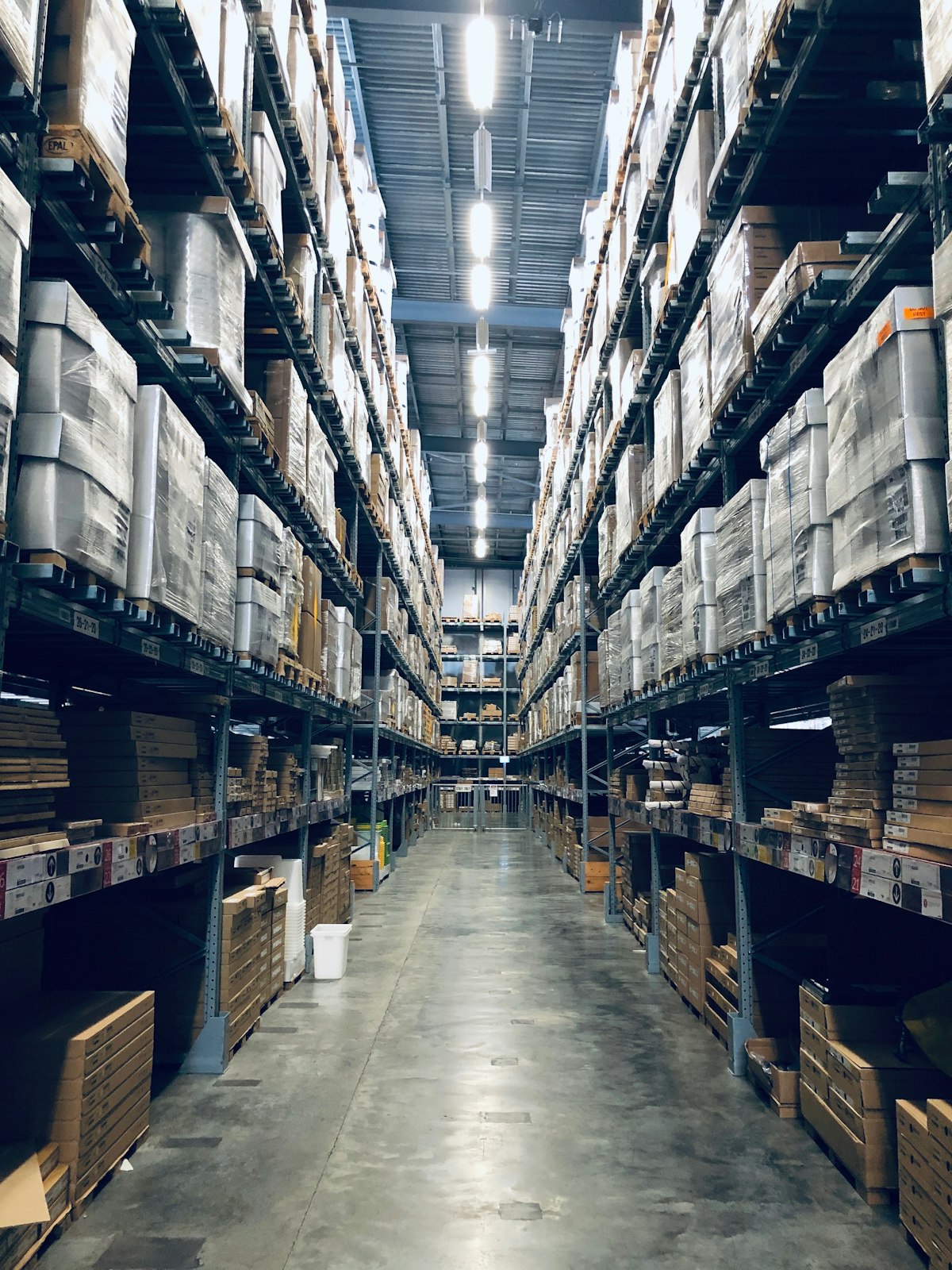
At Amazon's fulfillment center in Baltimore County, Maryland, a standard Tuesday shift begins at 5:00 AM. Within the first thirty minutes of operation, the warehouse's AI inventory management system has already recalculated optimal stock positions for 14,000 items based on predicted demand patterns for the next 72 hours, rerouted three inbound shipments to different dock doors based on real-time congestion data, and flagged two items for automatic reorder that will not run out for another five days—but the algorithm has calculated that replenishment lead times have extended due to port congestion and wants to act preventively. None of this required human intervention. The humans who work here—about 800 of them on any given shift—do the physical work of picking, packing, and moving goods. But the intelligence that coordinates everything has quietly migrated to the cloud.
This is the new reality of inventory management in manufacturing and logistics: a domain where AI has achieved perhaps its most complete commercial transformation, where the economic returns are substantial and measurable, and where the human implications remain deeply contested. The warehouse that runs itself is no longer science fiction. It is the competitive baseline for any company that wants to operate at scale in the modern economy.


Why Inventory Management Was AI's Perfect Problem
Inventory management is, at its core, a prediction and optimization problem—and these are precisely the tasks at which machine learning excels. The fundamental challenge is to have the right item in the right quantity at the right location at the right time, while minimizing the costs of holding inventory (storage, insurance, capital tied up in stock) and the costs of stockouts (lost sales, customer dissatisfaction, production delays). Traditional inventory management relied on rules of thumb, historical averages, and manual adjustments by experienced planners. These approaches worked adequately in stable environments but broke down rapidly under complexity or volatility.
The complexity of modern supply chains makes traditional approaches obsolete. A large consumer goods manufacturer might manage 500,000+ SKUs across hundreds of distribution centers and thousands of retail locations. The number of possible inventory decisions at any given moment is effectively infinite, and the interdependencies between them make it impossible for human planners to optimize globally. The human brain is excellent at considering a handful of factors simultaneously; AI systems can consider millions of interrelated variables in real time.
The economic case is compelling. A 2023 survey of 450 manufacturers by the Institute for Supply Management found that companies using AI-driven inventory optimization achieved, on average, a 23% reduction in inventory carrying costs, a 19% reduction in stockout incidents, and a 15% improvement in inventory turnover ratio. At a company with $500 million in annual inventory costs, these improvements translate to approximately $100 million in annual savings—a figure that explains why adoption is accelerating despite the substantial investment required to implement these systems.
The Technology Stack: How It Actually Works
Modern AI inventory systems are not single algorithms but integrated technology stacks combining several distinct capabilities. Time-series forecasting models—typically based on variants of LSTM recurrent neural networks or transformer architectures—predict future demand for each SKU at each location. These models ingest historical sales data, seasonality patterns, promotional calendars, weather forecasts, macroeconomic indicators, and increasingly, social media signals that can predict demand shifts before they appear in sales data.
Demand sensing represents the cutting edge of this capability. Companies like Blue Yonder and E2open have developed systems that can detect demand signals from a widening range of real-time data sources. When a product starts trending on social media, when a celebrity is photographed using a competing product, when weather forecasts predict unusual conditions in a key region—these events create demand signals that, processed by AI models, can shift predicted demand by meaningful percentages in real time. A 2024 case study by Blue Yonder documented a 31% reduction in forecasting error for a major European fashion retailer by incorporating social media trend signals into their demand planning models.
Once demand is forecast, reinforcement learning systems optimize inventory positioning across the supply chain. These systems model the entire network—factories, warehouses, distribution centers, retail locations, and the transportation links between them—as a dynamic system, and use RL algorithms to identify positioning strategies that minimize total supply chain cost while meeting service level targets. Amazon's systems, widely regarded as the most sophisticated in the industry, can simulate thousands of inventory positioning scenarios per minute and adjust real-world stock allocation accordingly.
The Last-Mile Challenge
The most difficult inventory problem in modern logistics is not in the warehouse—it is in the last mile. Getting an item from a distribution center to a customer's doorstep within 24 hours requires inventory to be pre-positioned at locations close to expected demand, but predicting where that demand will materialize at the granularity of a specific ZIP code is an enormously challenging forecasting problem. Amazon's anticipatory shipping program attempts to solve this by shipping items to local delivery stations before customers have actually ordered them—based on predictive models of what they are likely to order. The program reportedly reduced delivery times by an average of 4.5 hours per shipment, but has generated significant controversy about privacy and the energy waste of shipping items that are ultimately returned.
The Dark Table: AI Inventory Optimization — Before and After
| Metric | Traditional Management | AI-Optimized | Best-in-Class AI |
|---|---|---|---|
| Demand Forecast Accuracy | 65–75% | 78–85% | 88–94% |
| Inventory Carrying Cost (% of sales) | 8–12% | 6–8% | 4–6% |
| Stockout Rate | 3–5% | 1.5–2.5% | 0.5–1.5% |
| Inventory Turnover Ratio | 6–8x | 8–10x | 12–18x |
| Planning Cycle Time | 2–4 weeks | 3–5 days | Real-time |
| Obsolete Inventory (% of stock) | 5–8% | 2–4% | 0.5–2% |
Siemens' AI Factory: A Glimpse of Manufacturing's Future
Siemens' Amberg Electronics Plant in Bavaria, Germany, has been called the most advanced factory in the world. The plant, which produces programmable logic controllers used in industrial automation worldwide, operates with a 99.99885% defect rate—meaning that fewer than 12 out of every million products produced fail quality checks. What makes this even more remarkable is that the plant has operated at this level of quality for over a decade. The system responsible is not primarily human supervision—it is an AI-driven production optimization platform that monitors over 100 million data points per day and uses them to continuously adjust production parameters, predict equipment failures, and optimize quality control processes.
The plant's digital twin—a comprehensive computational model of the entire production process—allows Siemens to simulate changes before implementing them in the physical plant. A process engineer who wants to test whether adjusting a soldering temperature by 3 degrees would reduce defect rates can run the simulation, observe the predicted outcomes, and implement the change with confidence if the simulation supports it. The digital twin is updated continuously with real-time data from the physical plant, creating a feedback loop between simulation and reality that accelerates learning at a rate impossible in purely physical manufacturing environments.
Siemens has reported that the AI-driven optimization of its Amberg plant has reduced energy consumption by 12%, increased production throughput by 15%, and cut unplanned downtime by 40%—all while maintaining the extraordinary quality standards the plant is known for. The company is now rolling out the platform, branded as Siemens Industrial Operations X, to other facilities globally, including a new $300 million factory in Chengdu, China that will serve as a showcase for AI-integrated manufacturing.
The Human Cost of Optimization
The efficiency gains documented above are real and substantial. But they come with a human cost that the industry prefers not to quantify publicly. AI-driven inventory optimization systems are, fundamentally, labor replacement systems. They replace the cognitive work of experienced demand planners, supply chain analysts, and inventory managers with algorithmic processes that are faster, more accurate, and cheaper. The economic logic is irrefutable. The human consequences are not.
A 2025 analysis by the World Economic Forum projected that AI and automation will displace approximately 85 million jobs globally by 2030—but simultaneously create 97 million new roles, for a net positive of 12 million jobs. The problem with this aggregate framing is that the jobs destroyed and the jobs created are not in the same places, at the same skill levels, or offering the same compensation. A supply chain planner in Arkansas who loses her job to an AI system is not well-served by the knowledge that a new data science role has been created in San Francisco. Geographic, educational, and social mobility constraints mean that displaced workers frequently cannot access the new opportunities being created.
In Amazon's warehouses, the human workforce is not disappearing but transforming. The company reports that it has created over 800,000 robotics-related jobs since 2012—roles like robotics technicians, automation specialists, and human-robot interaction designers—that did not exist before. But these roles require technical skills that the majority of the warehouse workforce does not possess, and the company has faced ongoing criticism for the pace at which it is deploying automation relative to the rate at which it is retraining the affected workers.
The Supply Chain Resilience Paradox
One of the ironies of AI-optimized inventory management is that the very efficiency it creates can make supply chains more fragile. Just-in-time inventory systems, optimized by AI to minimize carrying costs, left global supply chains catastrophically exposed when the COVID-19 pandemic disrupted production and transportation networks. Companies that had optimized their inventory to near-zero buffer stock found themselves unable to respond to demand surges because they had no surplus to draw on.
The industry has responded to this vulnerability with a concept called "resilience optimization"—using AI not just to minimize costs but to find optimal positions on the cost-resilience tradeoff curve. This involves maintaining strategic buffer stocks of critical components, diversifying supplier networks, and building flexibility into production systems. AI systems now incorporate stress-testing capabilities that simulate the impact of supply chain disruptions—port closures, natural disasters, geopolitical crises—on the inventory network, and recommend pre-positioning strategies that maintain service levels under a range of disruption scenarios.
The lesson of the pandemic has not been that AI optimization was wrong—rather, that optimization targets were too narrow. The systems that performed best during the disruption were those that had incorporated resilience constraints into their optimization models before the crisis hit, sacrificing some efficiency for robustness. AI is now enabling a more sophisticated approach to this tradeoff than was previously possible, allowing companies to model the full range of plausible futures rather than optimizing for a single expected outcome.
The warehouse in Baltimore County will continue to run more intelligently every year. The AI systems coordinating it will get better at predicting what you want to buy before you decide to buy it, better at positioning inventory close to where you live, better at routing trucks along paths that minimize both time and carbon emissions. The question for the rest of us is whether we will build the institutions, retraining programs, and social safety nets needed to make sure that the people who make these systems possible share in the prosperity they create—or whether we will allow the efficiency gains to concentrate in the hands of those who already have most of them.